There are a few universal truths in this world. Water is wet. Gravity pulls down. And cats are absolutely, obsessively, and unhealthily fixated on fish.
For generations, the relationship between domestic felines and home aquariums has been a tense standoff. It involves a lot of staring, occasional pawing at the glass, and the inevitable moment when you have to fish a soaked, humiliated tabby out of your living room tank because they miscalculated a jump. The glass barrier is a source of endless frustration for the apex predator living in your house.
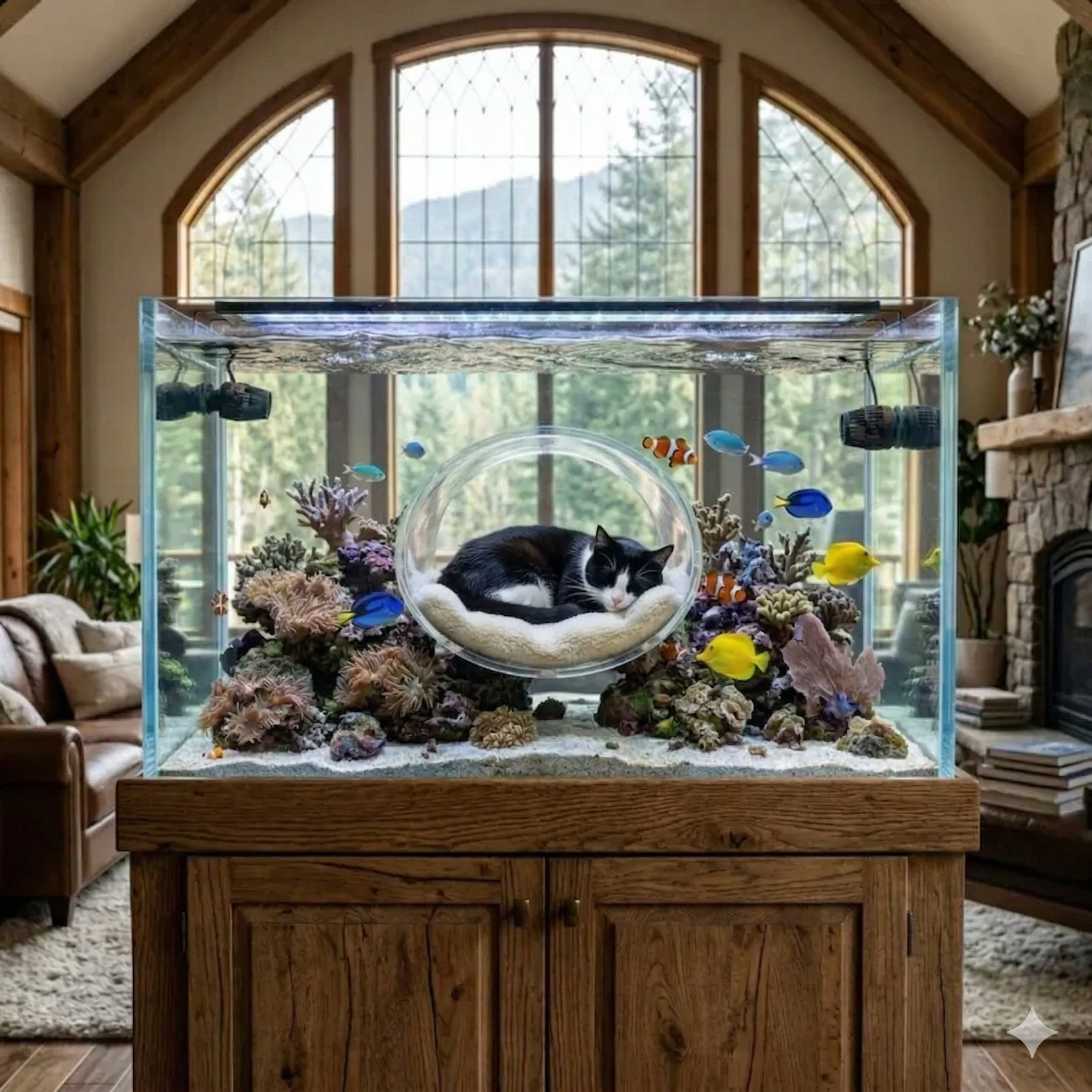
But what if you could bend the rules of physics? What if you could put the cat inside the water, surrounded by their scaly nemeses, without a single drop of water touching their precious fur?
This is not just a pet product; it is a monument to interspecies psychological warfare. It is the ultimate form of “Cat TV.” By engineering a dry, acrylic void straight through the center of a functioning fish tank, designers have created a front-row seat to the buffet.
In this feature, we are diving deep into the funniest, most absurd, and surprisingly brilliant trend in pet enrichment. We will explore the physics of the feline submarine, the reality of living with an underwater supervillain, and the undeniable challenges of scrubbing algae out of a tunnel shaped like a Maine Coon.
The Physics of the Feline Submarine
When you first look at an Aquarium with Built-In Cat Tunnel, your brain does a little stutter step. It looks like a magic trick.
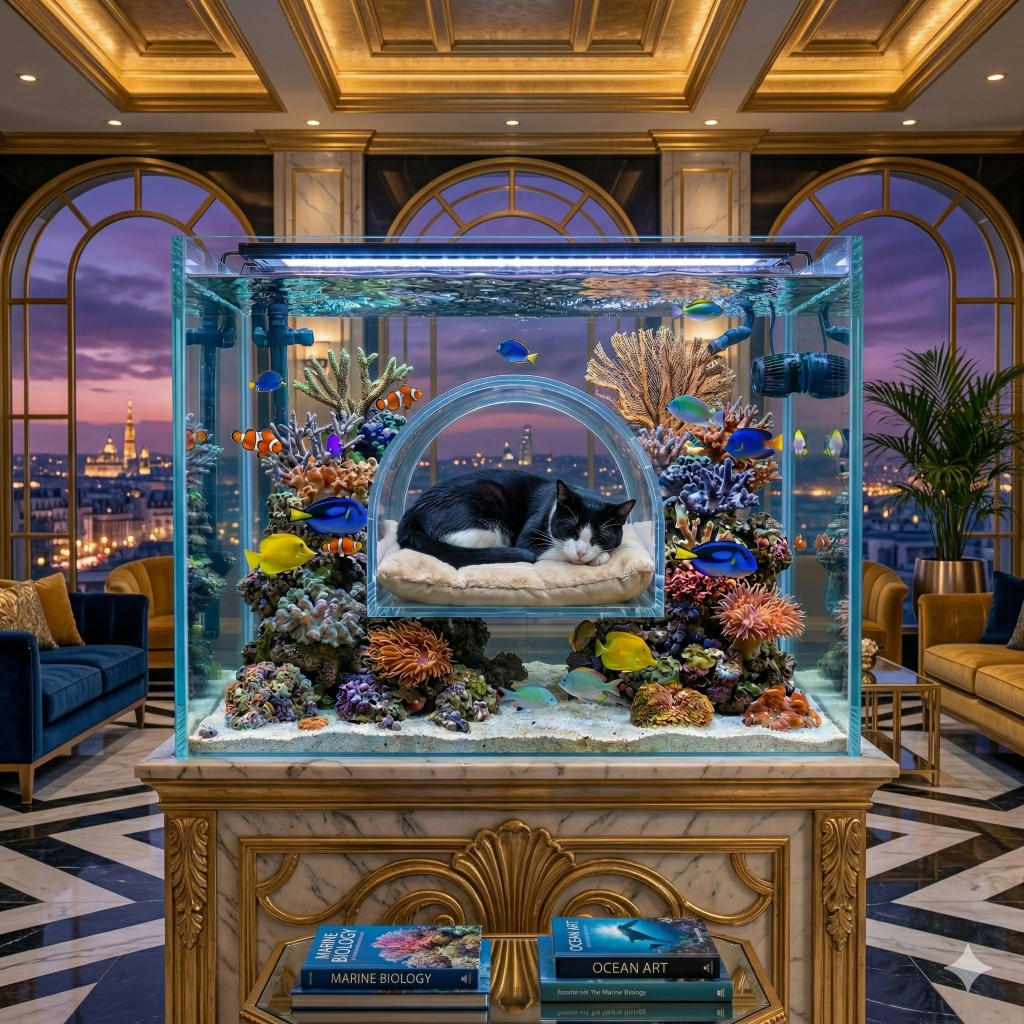
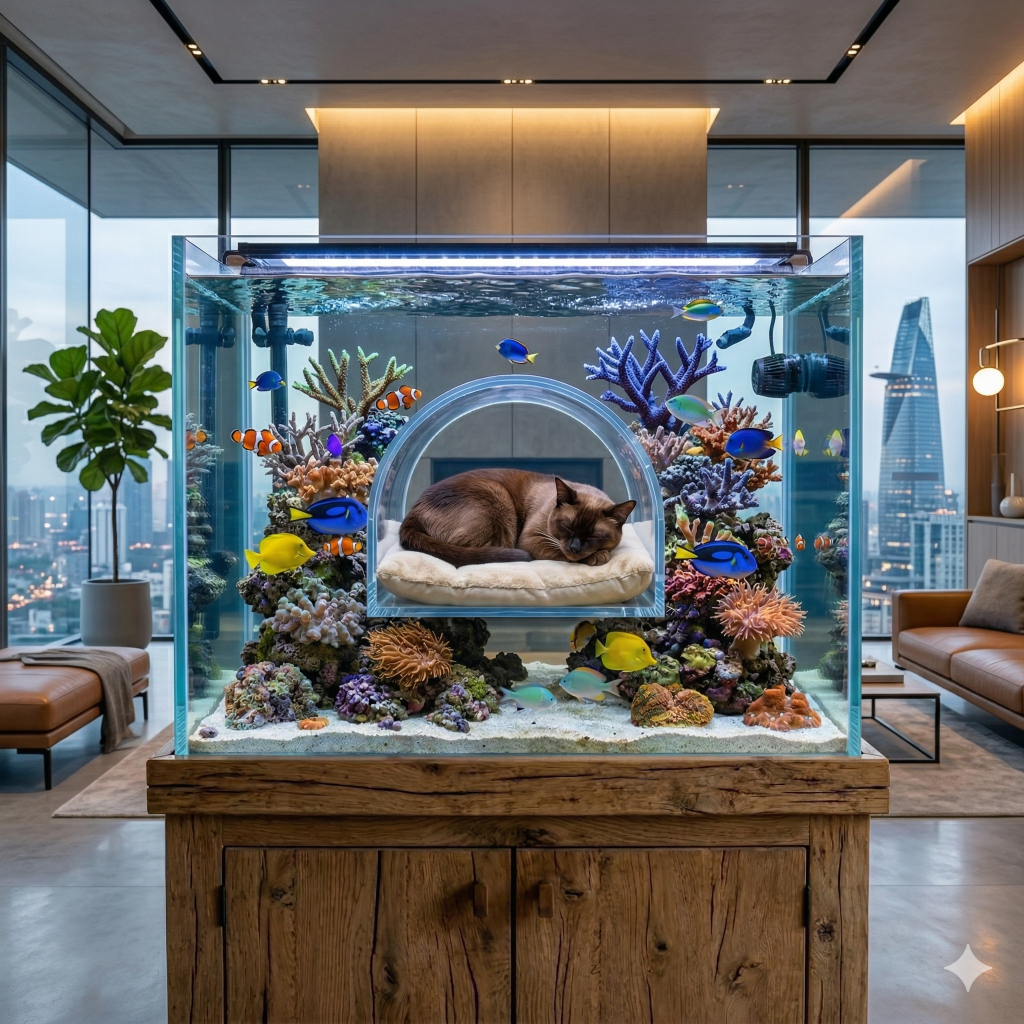
You have a standard, beautiful rectangular fish tank. But rising up from the bottom—or cutting straight through the middle from side to side—is a clear, hollow tube. The water surrounds it completely. The fish swim over it, under it, and around it. To the cat, it is a dry, cozy cave. To the fish, it is a bizarre, invisible forcefield that occasionally contains a giant, staring eyeball.
How It Actually Works
It all comes down to acrylic engineering and water displacement. The tunnel is sealed flawlessly into the base or the sides of the tank during the manufacturing process. Because the tunnel is displacing a massive amount of water, these tanks hold significantly fewer gallons than their outer dimensions suggest.
More importantly, water is heavy (roughly 8.3 pounds per gallon). The sheer pressure pushing down on that hollow tunnel is immense. Therefore, these aren’t flimsy plastic tubes. They are constructed from thick, high-grade acrylic or tempered glass designed to withstand the crushing weight of the aquatic world above, ensuring your fluffy friend doesn’t suddenly experience an indoor tsunami.The Predator’s Dilemma: A Front-Row Seat to the Buffet
If you want to provide mental enrichment for an indoor cat, you can buy them a laser pointer, or you can buy them an Aquarium with Built-In Cat Tunnel. The latter will keep them occupied until the end of time.
The first time a cat discovers the tunnel, it is a cinematic event. They approach it cautiously. They sniff the entrance. They realize it is a dark, enclosed space—which is prime real estate for any self-respecting feline. They crawl inside.



And then, they look up.
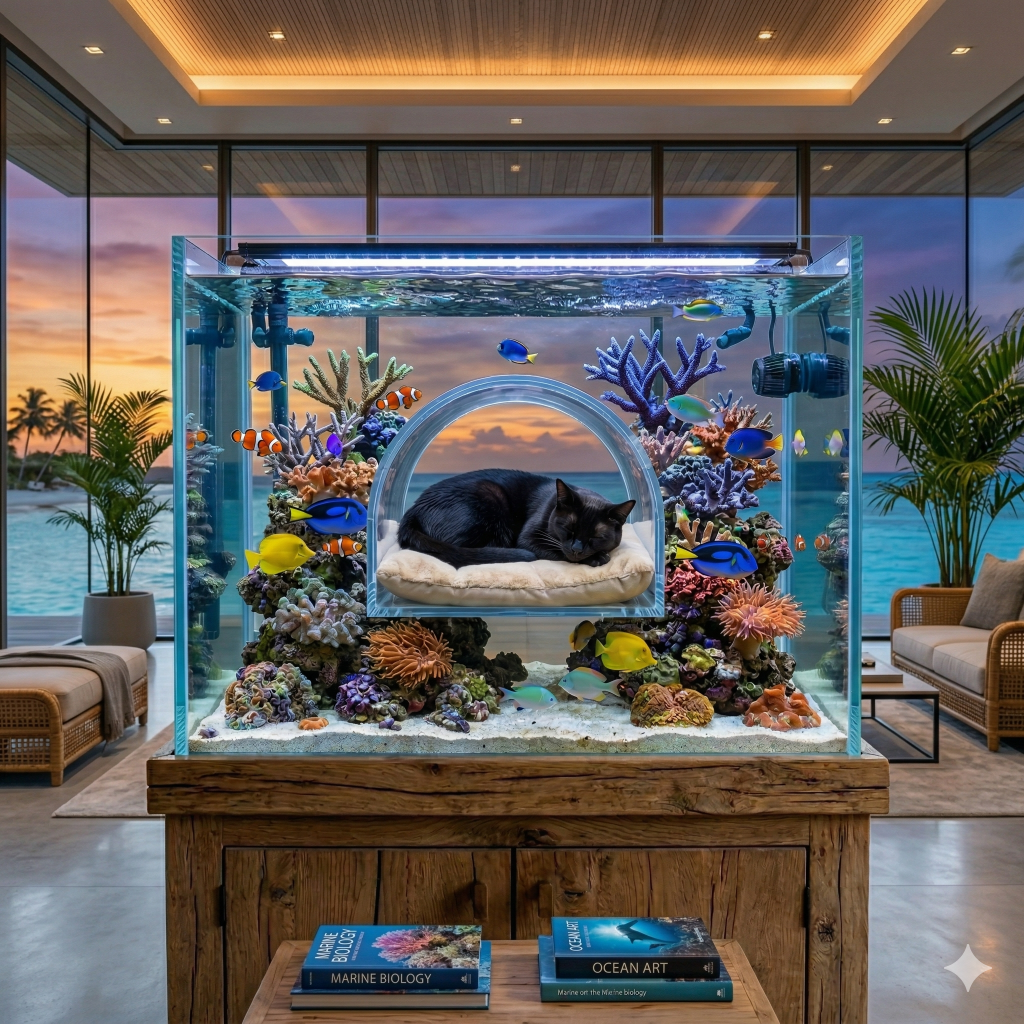
Suddenly, a neon tetra swims directly over their nose. You will witness the exact moment your cat’s brain short-circuits. They will reach up to swat the fish, only to hit the invisible barrier. They will scramble. They will chirp that weird “ekekekek” hunting noise. They will try to bite the water.
Eventually, the frantic hunting instinct gives way to awe. The tunnel becomes their observation deck. They will spend hours lying on their backs inside the tube, watching the aquatic world drift by. It is a sensory masterpiece. It engages their tracking instincts and keeps their minds razor-sharp, all while they are comfortably wedged in a cozy, dry space.The Fish Experience: Living with a Monster at the Window
We must, of course, address the other residents of this habitat. How do the fish feel about a giant, furry predator suddenly materializing in the middle of their living room?
In the beginning, there will be panic. If a massive tabby cat suddenly slid into a glass tube in your kitchen, you would panic too.
However, fish are incredibly adaptable creatures. Within a surprisingly short amount of time, they realize the furry monster cannot actually reach them. The glass is a universal peacekeeper.
Designing for Aquatic Sanity: If you are setting up an Aquarium with Built-In Cat Tunnel, you have a responsibility to your fish. You cannot just leave them in a bare tank with a staring cat.
- The Plant Barrier: You must plant the tank heavily. Use tall aquatic plants like Amazon Swords or Vallisneria around the edges of the tank. This gives the fish “safe zones” where they can retreat if they feel overwhelmed.
- The Right Species: Do not stock the tank with highly skittish, stress-prone fish. Opt for bold, active species. A school of Tiger Barbs or Zebra Danios will eventually completely ignore the cat. In fact, some curious fish (like Betta fish or certain Cichlids) might actually swim down to inspect the cat, creating a hilarious, interspecies staring contest.
The Two-Front War: Maintenance and Cleaning
Let us step away from the magic for a moment and deal with reality. Aquariums require maintenance. Cats are messy. An Aquarium with Built-In Cat Tunnel requires you to clean both simultaneously.
You are no longer just an aquarist; you are a tunnel janitor.
The Water Side (The Algae Problem): Algae grows on glass. It is a fact of nature. In a standard rectangular tank, you take a magnetic scraper and wipe it down in five minutes. But how do you scrape algae off the curved exterior of a tunnel located at the bottom of a tank? You will need specialized, curved algae scrapers on long handles. You will need a team of algae-eating snails and Corydoras catfish to help you do the heavy lifting. You will get your sleeves wet. It is the price you pay for the aesthetic.

The Dry Side (The Smudge Problem): Inside the tunnel, you have a completely different ecosystem of grime. Cats have wet noses. They have furry bodies. When a cat spends four hours rolling around inside an acrylic tube, they leave behind a thick layer of nose-art, paw prints, and shedding hair. To clean this, you essentially have to build a giant cotton swab. You will find yourself attaching a microfiber cloth to a broom handle, thrusting it into the tunnel, and furiously polishing the inside so the cat can have a clear view of their aquatic television.
Interior Design for Bond Villains
Integrating an Aquarium with Built-In Cat Tunnel into your home decor is a bold move. This is not a subtle piece of furniture. It is a massive, glowing box of water with a tunnel running through it. It looks like the architectural centerpiece of a supervillain’s underwater lair.
To make it work, you have to lean into the drama.
The Stand: Because of the displaced water and the heavy acrylic construction, this tank weighs a ton. You cannot put it on a standard Ikea bookshelf. You need a reinforced, heavy-duty aquarium stand. Opt for matte black or sleek wood finishes to ground the piece.
The Placement: The tunnel needs to be accessible. You cannot push the tank flush against a wall if the tunnel entrance is in the back. The best placement is often as a room divider. This allows the tank to be viewed from both sides, and gives the cat a “secret passageway” from the living room to the dining room, right through the water.
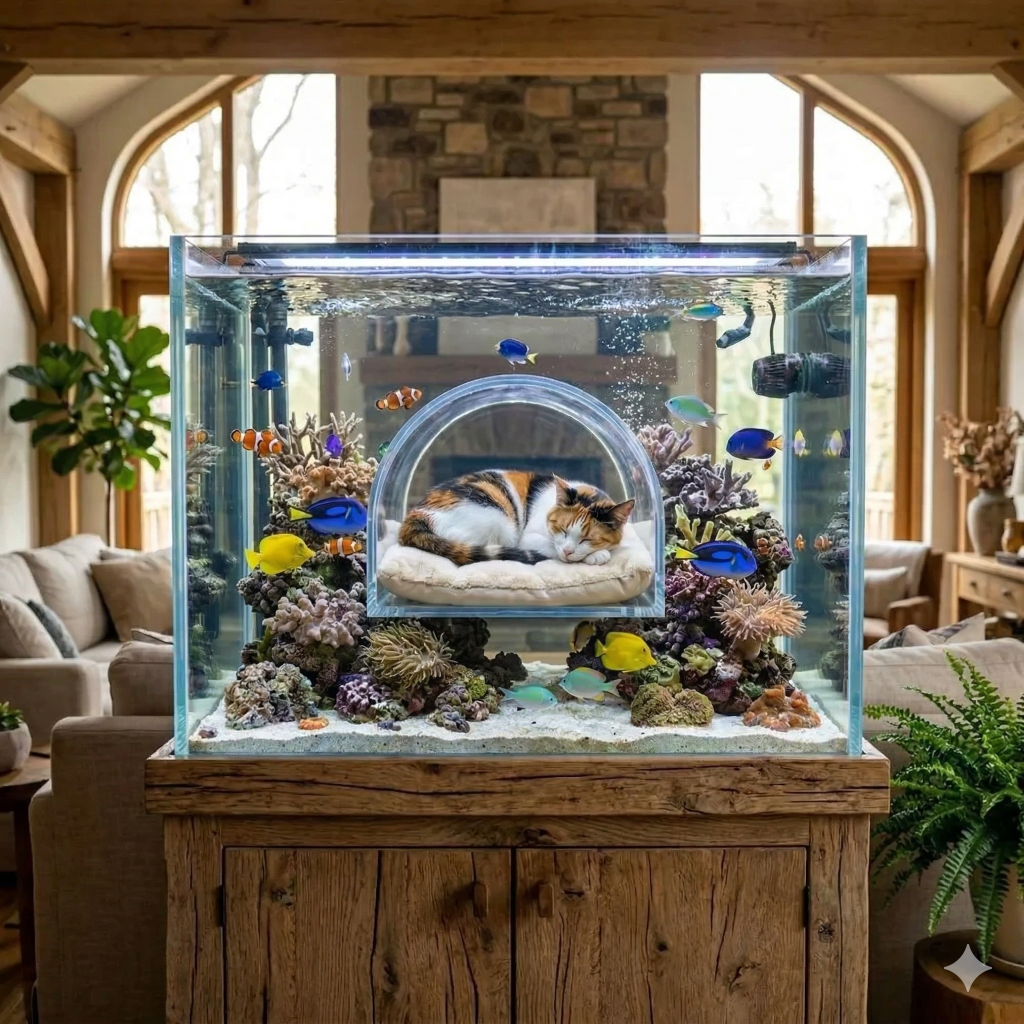
The Lighting: The lighting makes or breaks the effect. Use a full-spectrum LED light with a day/night cycle. During the day, the tank is a bright, vibrant jungle. But at night, switch it to the “Moonlight” setting (a dim, actinic blue). When your cat crawls into the tunnel under the blue light, they look like a glowing, deep-sea creature. It is wildly photogenic.
The Ultimate Status Symbol for Pet Parents
We do ridiculous things for our pets. We buy them orthopedic beds they refuse to sleep in. We buy them automated laser toys they ignore in favor of a cardboard box.
But the Aquarium with Built-In Cat Tunnel is the rare luxury item that delivers on its promise. It is an undeniable, foolproof source of entertainment for an indoor cat.
It taps into their deepest instincts—stalking, observing, and hiding—in a completely safe, controlled environment. It turns a standard hobby (fish keeping) into a spectacular, interactive exhibit.
Yes, it is difficult to clean. Yes, it takes up a massive amount of space. And yes, you will occasionally walk into your living room in the middle of the night, turn on the light, and see a pair of glowing cat eyes staring at you from the bottom of a fish tank, which is objectively terrifying.
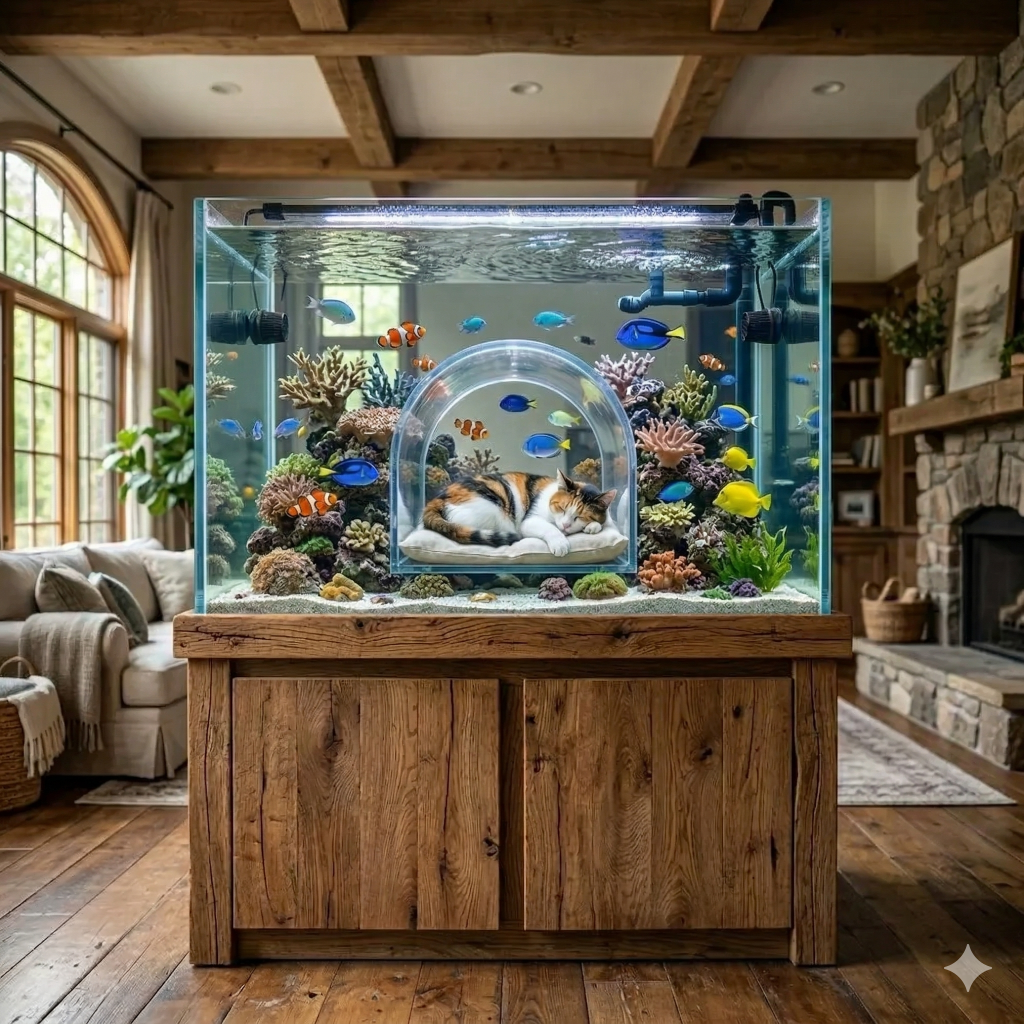
But it is also pure joy. It bridges two entirely different worlds. It allows the land predator and the aquatic prey to coexist, separated by just a few millimeters of acrylic, bound together by mutual curiosity.
So, clear out some floor space. Reinforce your floorboards. And prepare to offer your cat the greatest cinematic experience of their nine lives. The underwater theater is open, and the admission is just a handful of cat treats.