
Home decor has been taking itself too seriously for too long. We have spent years obsessing over sharp angles, beige linen, and “minimalist” spaces that look beautiful but feel cold. We have built living rooms that look like museums, not sanctuaries.
But a shift is happening. We are craving connection. We are craving warmth. We are craving… well, a hug.
And since we can’t always get a hug from a human, the design world has given us the next best thing: The Walking Cat Recliner.
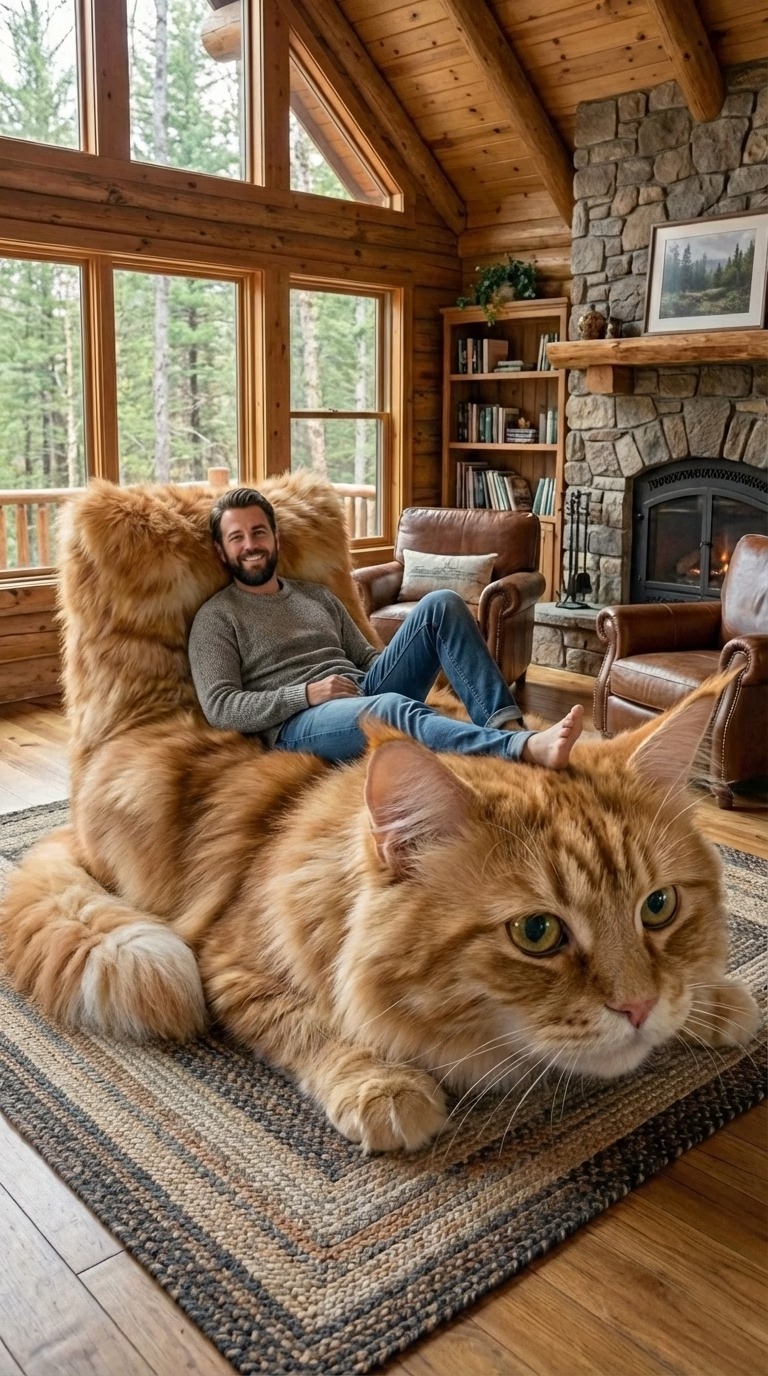
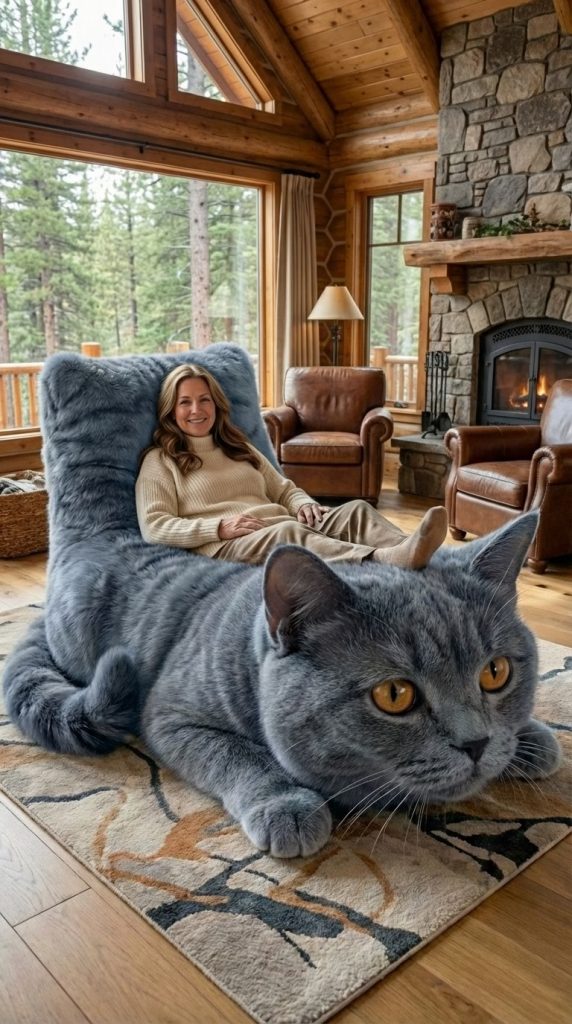
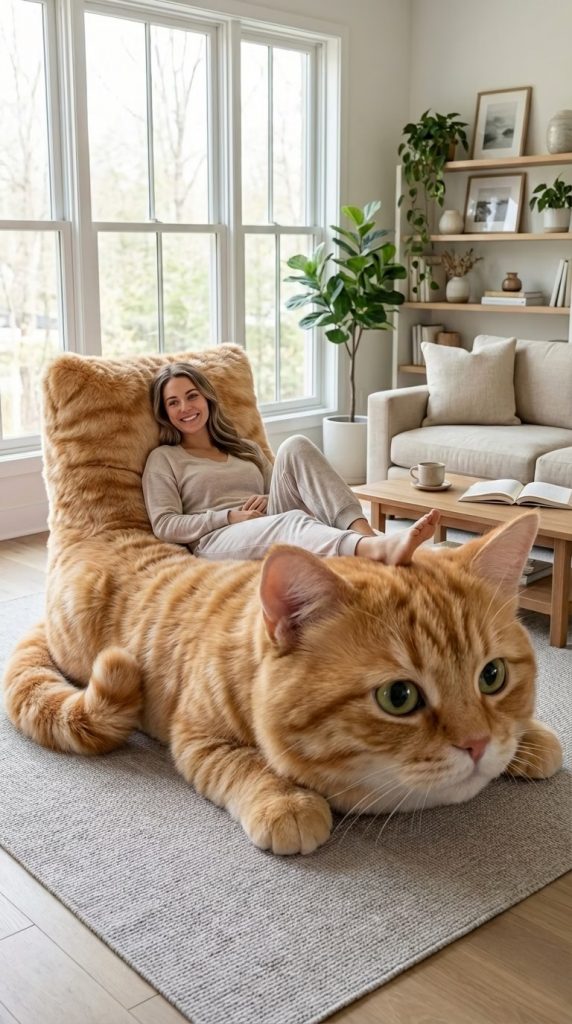
If you haven’t seen this viral sensation yet, picture this: A plush, overstuffed armchair. But instead of wooden pegs for legs, it has four sturdy, furry paws. Instead of a stiff backrest, it has the curved, supportive spine of a giant feline. It looks like a creature from a Studio Ghibli movie has wandered into your living room and decided to let you take a nap on its back.
This article isn’t just about a chair. It’s about the rise of “Creature Comfort” and why this specific piece of furniture is capturing hearts (and nap times) across the globe.
The “Catbus” Fantasy Come to Life
To understand the obsession with the Walking Cat Recliner, we have to talk about fantasy.
For decades, pop culture has teased us with the idea of friendly, giant beasts. From the Catbus in My Neighbor Totoro to the Daemons in His Dark Materials, we have always loved the idea of an animal that is large enough to protect us and soft enough to sleep on.
The Walking Cat Recliner brings that fantasy into reality.
Unlike a standard beanbag or a rigid sofa, this design implies life. The legs are often positioned in a mid-stride stance, giving the illusion that the chair could get up and move to a sunnier spot in the room at any moment. It transforms furniture from a static object into a “roommate.” It doesn’t just sit there; it has a presence. It watches over the room.
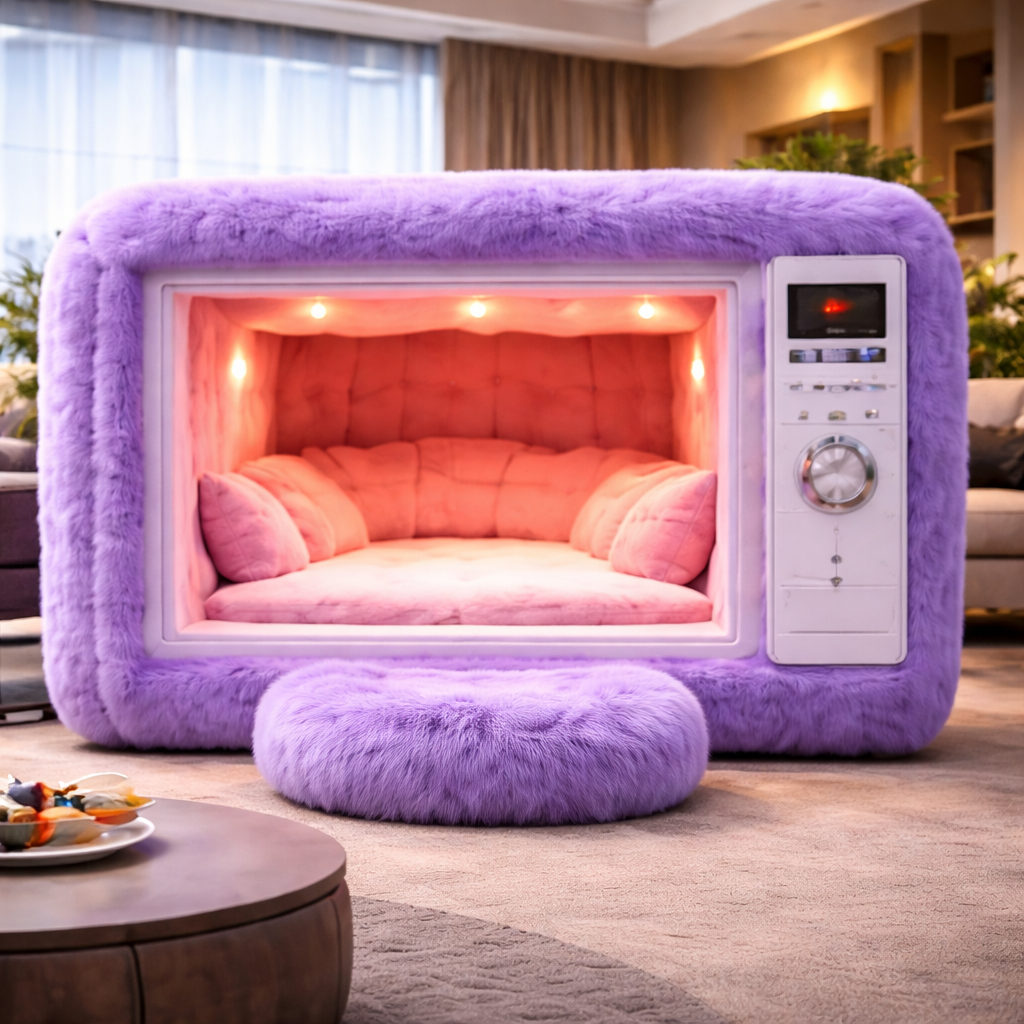
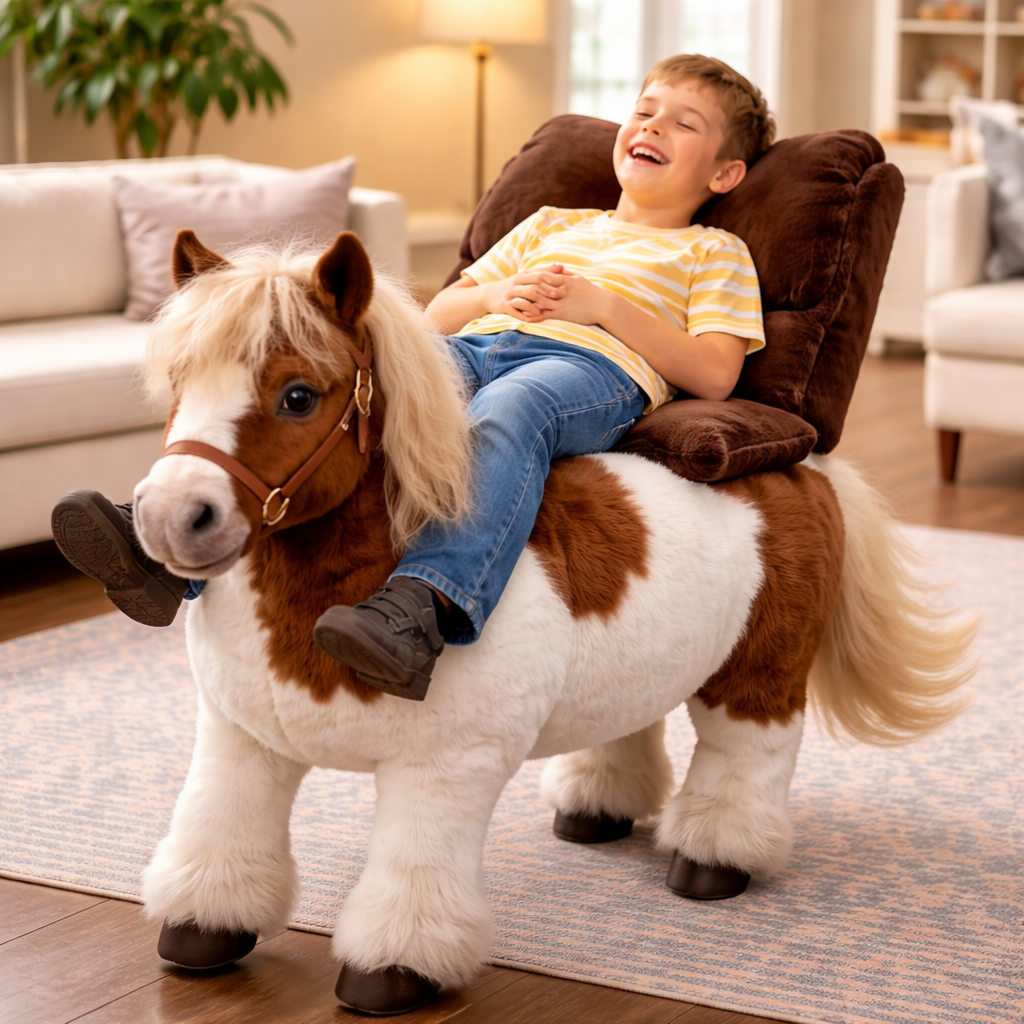

Anatomy of the Ultimate Nap Spot
What makes this chair technically superior to your average recliner? It comes down to the unique “Feline Ergonomics.”
1. The “Biscuits” Texture
Standard chairs use leather or woven fabric. The Walking Cat Recliner almost exclusively uses high-pile faux fur or “teddy” shearling. This triggers a tactile response. It mimics the feeling of petting an animal, which is scientifically proven to lower cortisol (stress) levels. You aren’t just sitting; you are soothing your nervous system.
2. The Enveloping Shape
Cats are liquid; they flow into shapes. These chairs mimic that fluidity. The “arms” of the chair are often shaped like the cat’s curling tail or front paws, creating a wrap-around effect. It provides a sense of security, much like a weighted blanket, making it the ideal retreat for introverts or anyone suffering from anxiety.
3. The “Belly” Suspension
In traditional furniture, you sit on a cushion. In a Walking Cat Recliner, you sink into the belly. The suspension is often softer, designed to cradle the body rather than prop it up. It forces you to relax. You cannot sit upright and type a formal email in a giant cat chair. You have to recline. You have to surrender to the nap.
Interior Design: The “Magical Realism” Aesthetic
You might be thinking: “I’m an adult. Can I really have a giant cat chair in my house without looking crazy?”
The answer is yes, but it requires a specific styling approach. Designers are calling this trend “Magical Realism Decor.” It’s about having a normal, stylish room with one element that feels slightly surreal.
How to Style It:
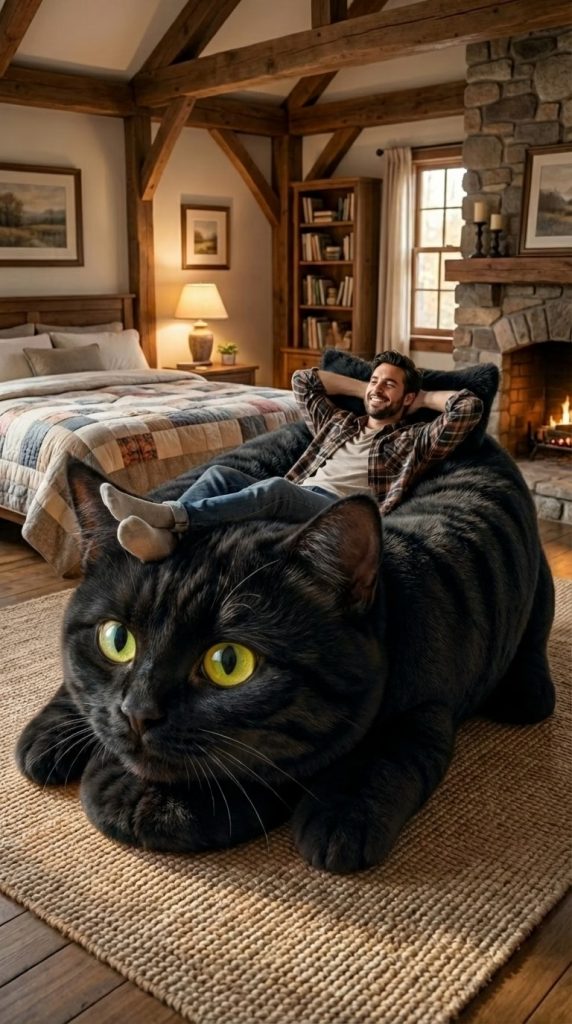
- The Minimalist Contrast: Place a black or white Walking Cat Recliner in a room with stark, clean lines and concrete floors. The chair becomes a sculptural art piece. It softens the hardness of the room.
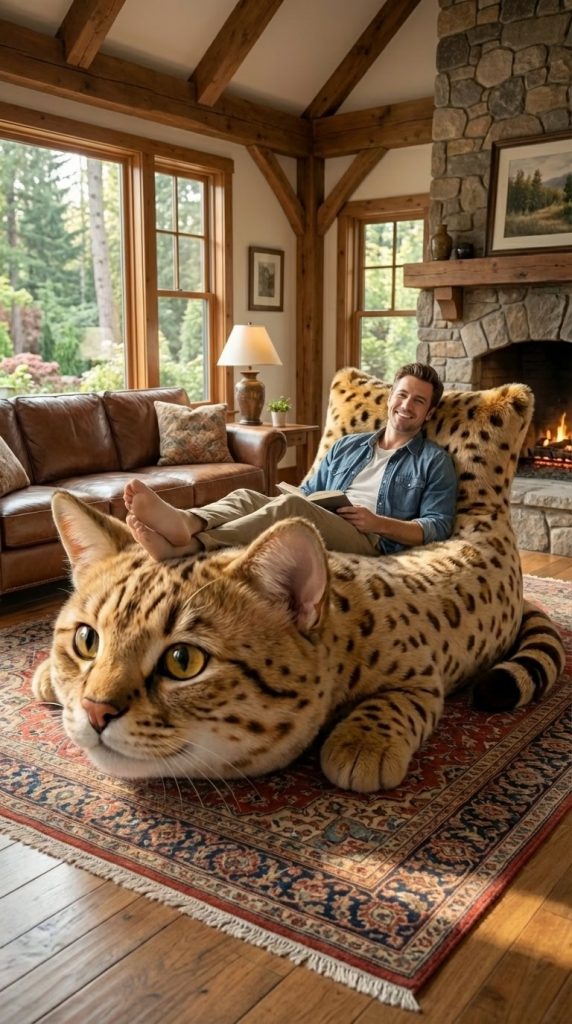
- The Reading Nook: This is the natural habitat of the cat chair. Pair it with a floor lamp, a stack of books, and a trailing plant. It creates a “storyboard” corner that invites you to escape reality.
- The Color Pop: If you choose a bold color (like a Cheshire Cat purple or an orange tabby print), let the rest of the room be neutral. Let the cat be the star of the show.
The Emotional Utility: Why We Need It Now
We are living in the “Age of Loneliness.” More people live alone than ever before. Remote work keeps us isolated. In this context, furniture takes on a new role.
A Walking Cat Recliner provides a psychological anchor. It fills the empty space in a room with personality. Coming home to a chair that looks like a sleeping animal triggers a different part of the brain than coming home to a beige sectional. It feels like a greeting.
Furthermore, for people who cannot have pets due to allergies or rental restrictions, this is a surprising alternative. It offers the aesthetic joy of a cat—the cute ears, the paws, the softness—without the litter box, the vet bills, or the 3 AM zoomies.
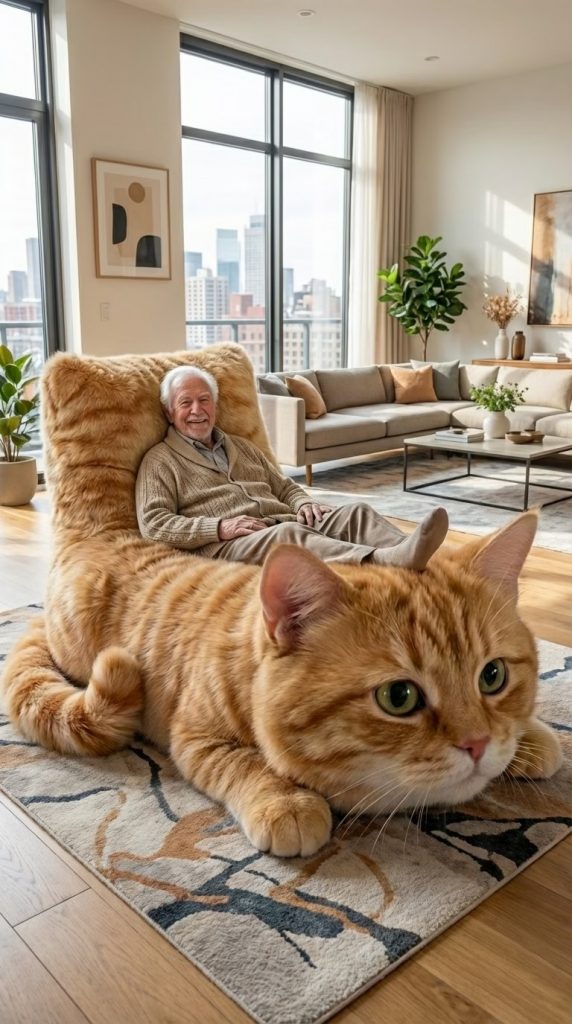
Buying Guide: Spotting the Fakes
Because the Walking Cat Recliner went viral through AI-generated images on social media, the market is a mix of high-end design pieces and cheap knock-offs. Here is how to navigate the hunt.
1. The “Structure” Test A cheap version will be a shapeless beanbag that collapses when you sit. A true Walking Cat Recliner has an internal frame (wood or metal) that maintains the “walking” stance even when bearing weight. Check for “solid wood frame” in the description.
2. The Fur Quality Look for “removable covers.” A giant furry chair is a dust magnet. If you cannot unzip the “skin” of the cat to wash it, you will regret the purchase in six months. High-quality synthetic fur should be machine washable.
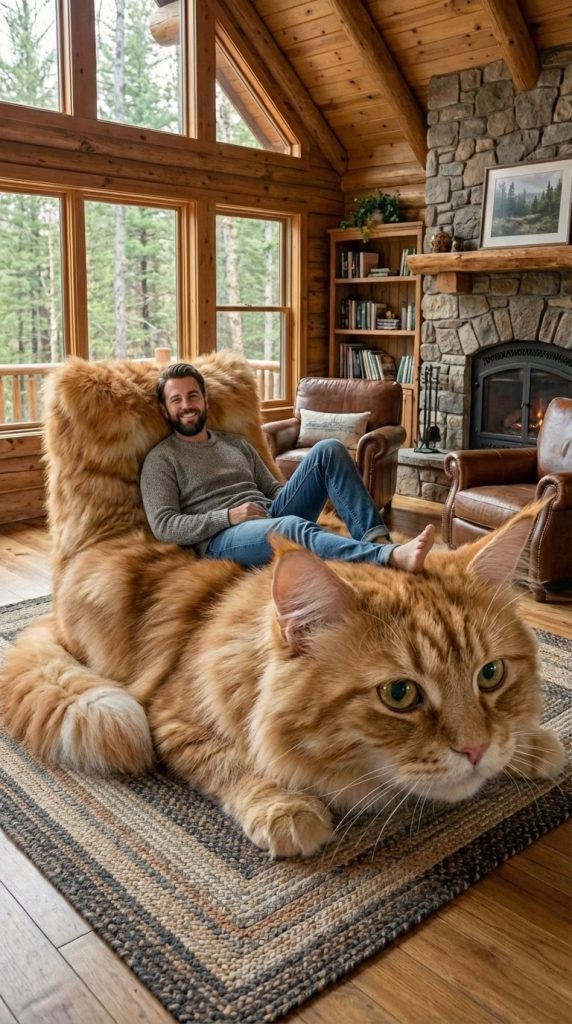
3. Size Matters Pay attention to dimensions. Many novelty items are sized for children. A “Giant Cat Chair” that is only 30 inches high is a stool, not a recliner. You want a backrest height of at least 40 inches to support an adult head.
The Future of “Alive” Furniture
The Walking Cat Recliner is likely just the beginning. We are moving toward an era of “biophilic” design that goes beyond just having plants. We want our homes to feel alive.
We are seeing bear-shaped sofas, bird-shaped lamps, and tables that look like jellyfish. We are rejecting the sterile “showroom” look in favor of a home that feels like a storybook.
Owning a piece like this is a declaration. It says that you prioritize joy over convention. It says that you aren’t afraid to be a little weird. And most importantly, it says that when you relax, you want to do it in the belly of the beast.
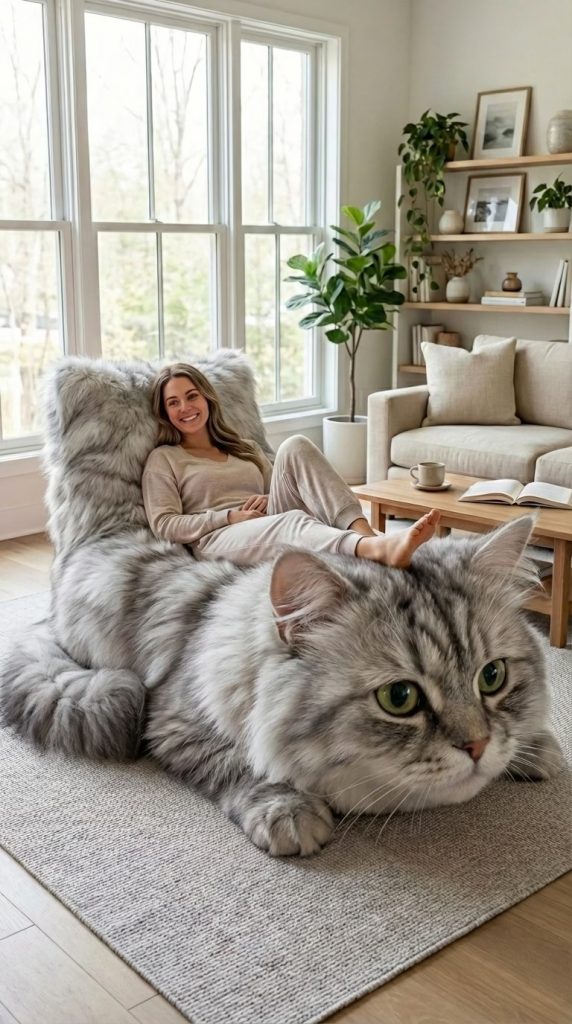
So, if you are tired of your stiff, serious sofa, maybe it’s time to adopt. The Walking Cat Recliner is house-trained, doesn’t shed, and is always ready for a cuddle. What more could you want?