Gardening has always been described as an art form. We talk about “composing” a landscape, “layering” textures, and “balancing” colors. But for most of us, the connection remains metaphorical. We plant in straight rows, rectangular boxes, or kidney-shaped blobs that don’t really resemble anything specific. We treat the garden as a chore list rather than a canvas.
But what if you took the metaphor literally?
What if your garden didn’t just look pretty, but actually represented the tool of the artist?
Enter the Paint Palette Garden.
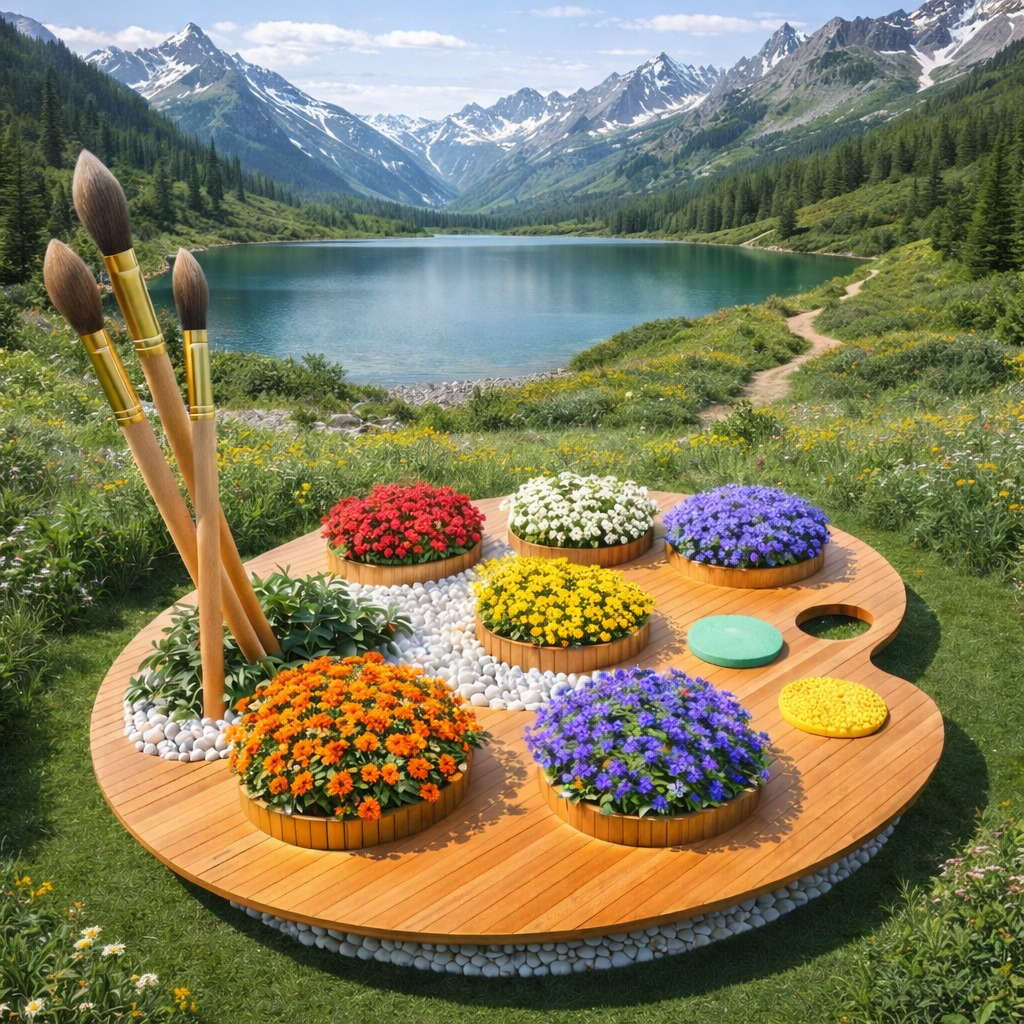
This is one of the most charming, photogenic, and creative trends in landscape design. It involves shaping a flower bed to look exactly like a classic wooden artist’s palette—complete with the “thumb hole”—and filling it with distinct, circular clusters of mono-colored flowers that mimic wet dabs of oil paint.
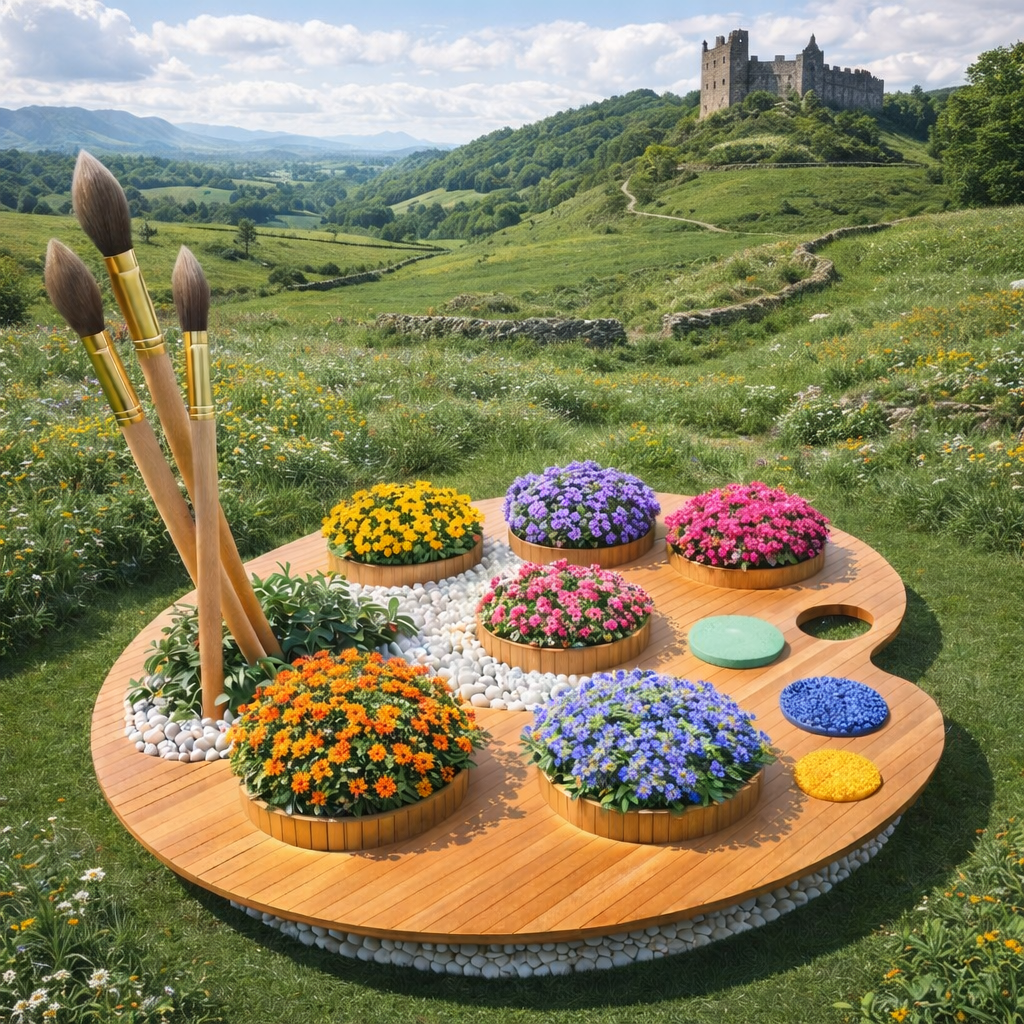
It is a celebration of color theory. It is a tribute to Monet and Van Gogh. And most importantly, it is a way to break free from the monotony of green lawns and square hedges. In this feature, we are putting on our smocks and grabbing our trowels to explore how you can cultivate a living masterpiece right outside your window.
The Concept: Nature as Pigment
The Paint Palette Garden is a specific type of “figural” landscaping. Unlike a wildflower meadow where chaos is encouraged, this design relies on structure and separation.
The magic lies in the Color Blocking.
On a real palette, an artist squeezes out a blob of red, a blob of yellow, and a blob of blue. They don’t mix them immediately. They sit there, pure and saturated. To recreate this with plants, you cannot mix your seeds. You need to plant in tight, dense clusters of a single color. You need a circle of deep red Begonias next to a circle of bright yellow Marigolds, separated by a negative space (the “wood” of the palette).
When viewed from a second-story window or a drone, the effect is optical pop art. It looks as if a giant has left their art supplies in your yard.
Step 1: Carving the Canvas (The Hardscaping)
You cannot have a Paint Palette Garden without the right shape. If it’s just a circle, it’s a pizza. If it’s a square, it’s a box. You need that iconic, kidney-bean curve with the indentation.
The Outline
The most effective way to start is with a garden hose. Lay the hose out on the grass to define your perimeter. You want a flowing, organic curve that tapers slightly at one end.
- The Thumb Hole: This is the detail that sells the illusion. You must include a circle near the “back” of the palette.
- Option A (Hardscape): Place a large, round paving stone here.
- Option B (Negative Space): Leave a circle of grass.
- Option C (Water): Install a small round birdbath. This acts as the “water cup” for rinsing brushes.
The Edging (The Frame)
A real palette is made of wood. To mimic this, use flexible landscape edging in a light wood tone or natural stone. Some dedicated DIYers actually build a raised bed using bent plywood or cedar planks to create the palette shape, raising the “paint” off the ground by 6-12 inches. This adds drama and makes the colors pop against the green grass.
Step 2: Choosing Your Pigments (The Plants)
This is the fun part. You are no longer a gardener; you are a curator of color. To make a Paint Palette Garden work, you need plants that are:
- Compact: You want mounds, not sprawling vines.
- Color-Dense: You want more flower than leaf.
- Long-Blooming: You want the paint to look “wet” all season.
Here is a guide to stocking your botanical paintbox:
The Primary Colors
- Cadmium Red: Wax Begonias or Red Salvia. These offer a deep, saturated red that holds up in the sun.
- Lemon Yellow: French Marigolds or Dwarf Zinnias. They form tight, bright mounds that look exactly like a dollop of sunshine.
- Ultramarine Blue: Ageratum (Floss Flower) or Lobelia. True blue is hard to find in nature, but these low-growing, fuzzy flowers mimic the texture of thick acrylic paint perfectly.
The Secondary Colors
- Vivid Orange: California Poppies or Gazanias.
- Deep Purple: Petunias or Heliotrope.
- Titanium White: Alyssum or White Impatiens. White is crucial. It acts as a highlighter, making the other colors look brighter by comparison.
Design Tip: Do not plant these in rows. Plant them in circles. Imagine a 2-foot wide circle of just red. Then, a foot away, a 2-foot circle of just blue. Mulch heavily between the circles with cedar chips (to look like the wood of the palette).
The “Brush” Prop: Selling the Illusion
If you really want to lean into the theme (and let’s be honest, if you are building this, you do), you need props. A Paint Palette Garden is a stage set.
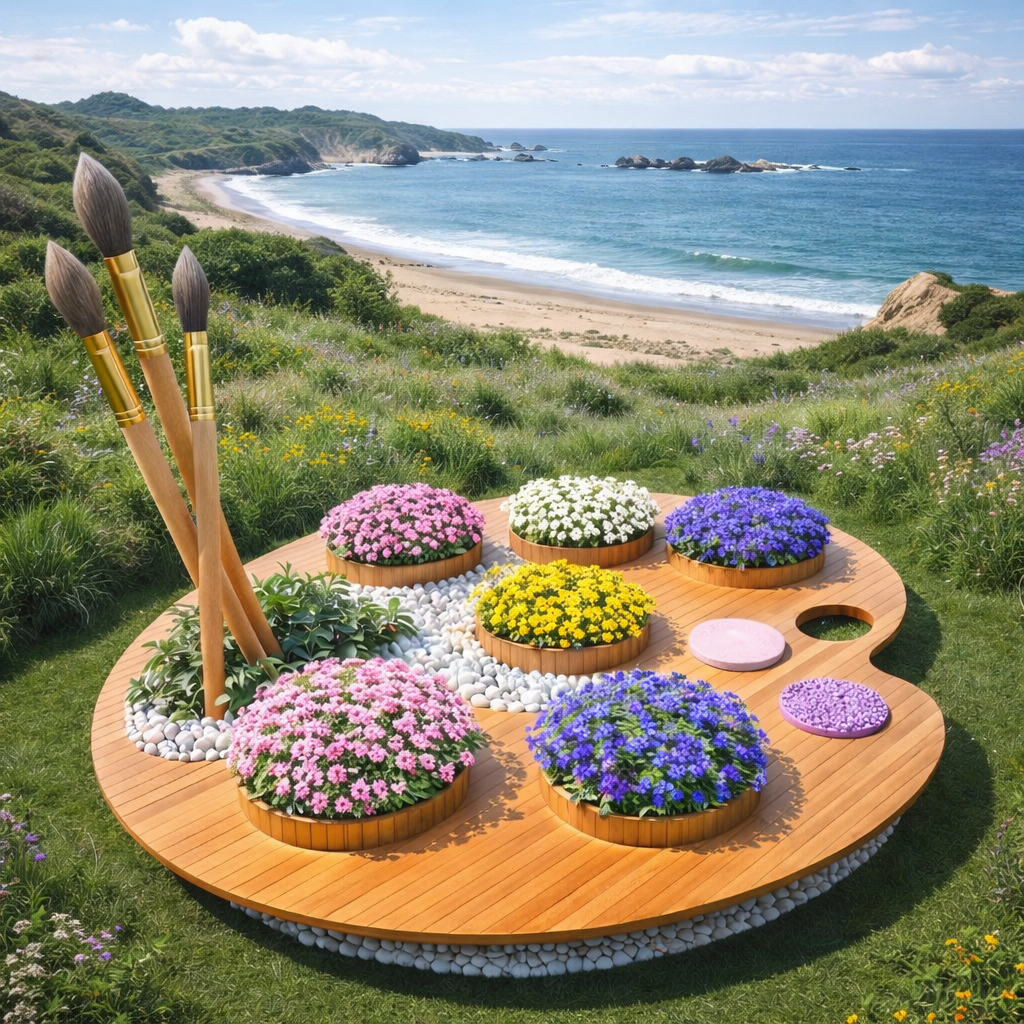
The Giant Brush: You can buy or make a giant paintbrush.
- The Handle: Use a 4×4 fence post or a recycled broom handle, stained dark brown.
- The Bristles: Use stiff ornamental grass (like Mexican Feather Grass) or actual broom bristles attached to the end.
- The Placement: Stick the “brush” into the ground at an angle, as if the artist just set it down. Position the “bristles” so they are touching one of the color circles (like the red begonias), creating the illusion that the brush is dragging the color across the soil.
The Easel: If you don’t have space on the ground, some gardeners create a Vertical Paint Palette Garden. They cut a palette shape out of plywood, mount terra cotta pots on it, and place the whole thing on a large wooden easel in the middle of the yard.
Texture and Height: The Brushstrokes
A painting isn’t flat; it has texture. Your garden should too. When selecting your “paint,” think about the viscosity.
- The “Watercolor” Look: Use airy, wispy plants like Baby’s Breath or Cosmos. This creates a soft, blended look, like a wash of color.
- The “Oil Paint” Look: Use dense, velvety plants like Petunias or Celosia (Cockscomb). Celosia is particularly effective because the flower heads look like textured, impasto brushstrokes.
The Height Hierarchy: Keep the plants relatively low (under 12 inches). If they get too tall and floppy, you lose the definition of the “blobs.” If you must use taller plants, place them in the center of the palette and keep the edges low with creeping ground cover.
Seasonal Galleries: Changing the Art
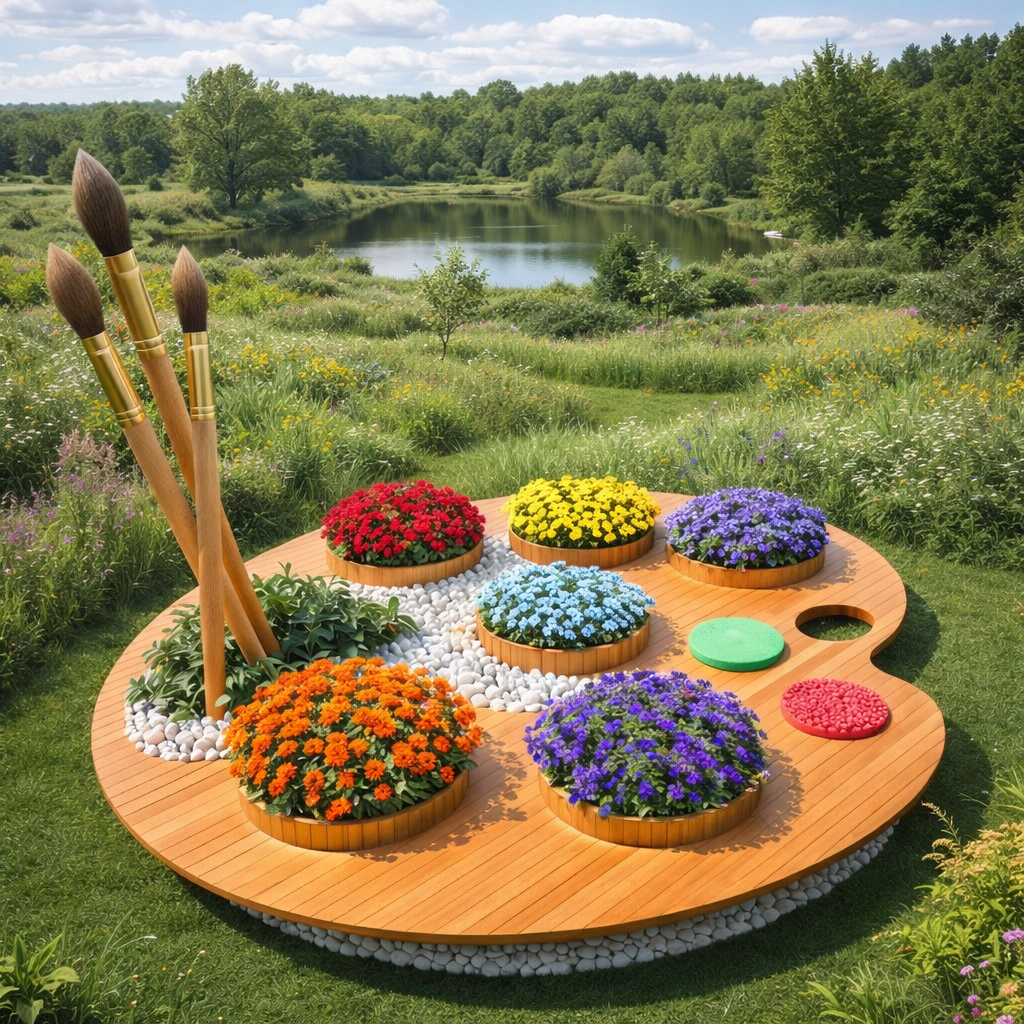
The beauty of a garden is that it is a slow-motion video, not a still photo. Your Paint Palette Garden can change its “style” as the seasons shift.
The Spring Pastel Sketch: Start the year with bulbs.
- Paint: Crocus, Hyacinths, and miniature Daffodils.
- Vibe: Soft, light, and impressionistic. The colors will be pale purples, pinks, and yellows.
The Summer Pop Art: This is prime time.
- Paint: Petunias, Marigolds, Zinnias.
- Vibe: Bold, saturated, and neon. This is when the palette looks most like a cartoon or a Andy Warhol piece.
The Autumn Oil Painting: As the light gets golden, switch to warmer tones.
- Paint: Mums (Chrysanthemums) are the king of the autumn palette. You can get them in deep rust, burnt orange, and burgundy.
- Vibe: Rich, moody, and textured.
Maintenance: Cleaning the Palette
Real artists have to clean their workspace. You have to weed yours. A Paint Palette Garden relies on Negative Space.
The space between the color blobs must remain clean. If weeds grow there, or if the red flowers grow into the yellow flowers, the illusion of distinct “dabs of paint” is ruined. It just becomes a messy mixed border.
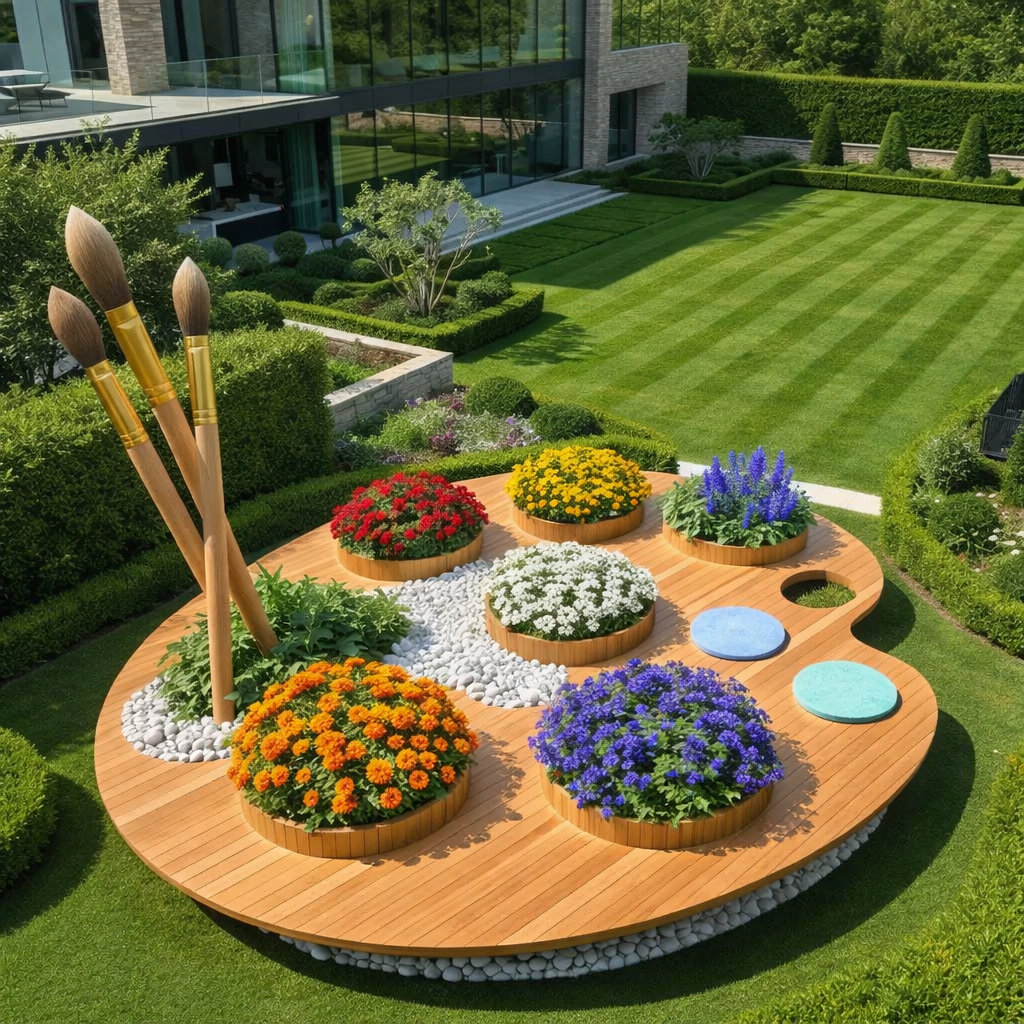
- The Mulch: Use a high-quality, fine-shred mulch. Ideally, pick a color that matches the wood of your edging (a light brown or tan). Avoid dyed red or black mulch, as it distracts from the flower colors.
- Deadheading: This is critical. Spent blooms look like “muddy” paint. You need to deadhead (remove old flowers) weekly to keep the pigments looking fresh and bright.
- Edging: Keep the grass around the palette trimmed sharp. A crisp edge acts like a picture frame, elevating the whole look.
The Psychological Impact: Color Therapy
We often talk about “Green Spaces,” but humans crave the full spectrum. Chromotherapy (Color Therapy) suggests that looking at different colors creates different emotional responses.
- Red: Energizing.
- Blue: Calming.
- Yellow: Optimistic.
By concentrating these colors into intense pools in your Paint Palette Garden, you create a mood board for your mind. It is a place to sit and soak up visual nutrition. It transforms the act of gardening from a chore into a creative expression. You aren’t just “keeping the plants alive”; you are keeping the composition balanced.
Conclusion: Sign Your Work
Every artist signs their work. In a garden, your signature is the care you put into it.
The Paint Palette Garden is more than just a landscaping trick. It is a shift in perspective. It forces you to look at a petunia not just as a flower, but as a drop of violet ink. It forces you to look at the soil not just as dirt, but as a canvas waiting for your vision.
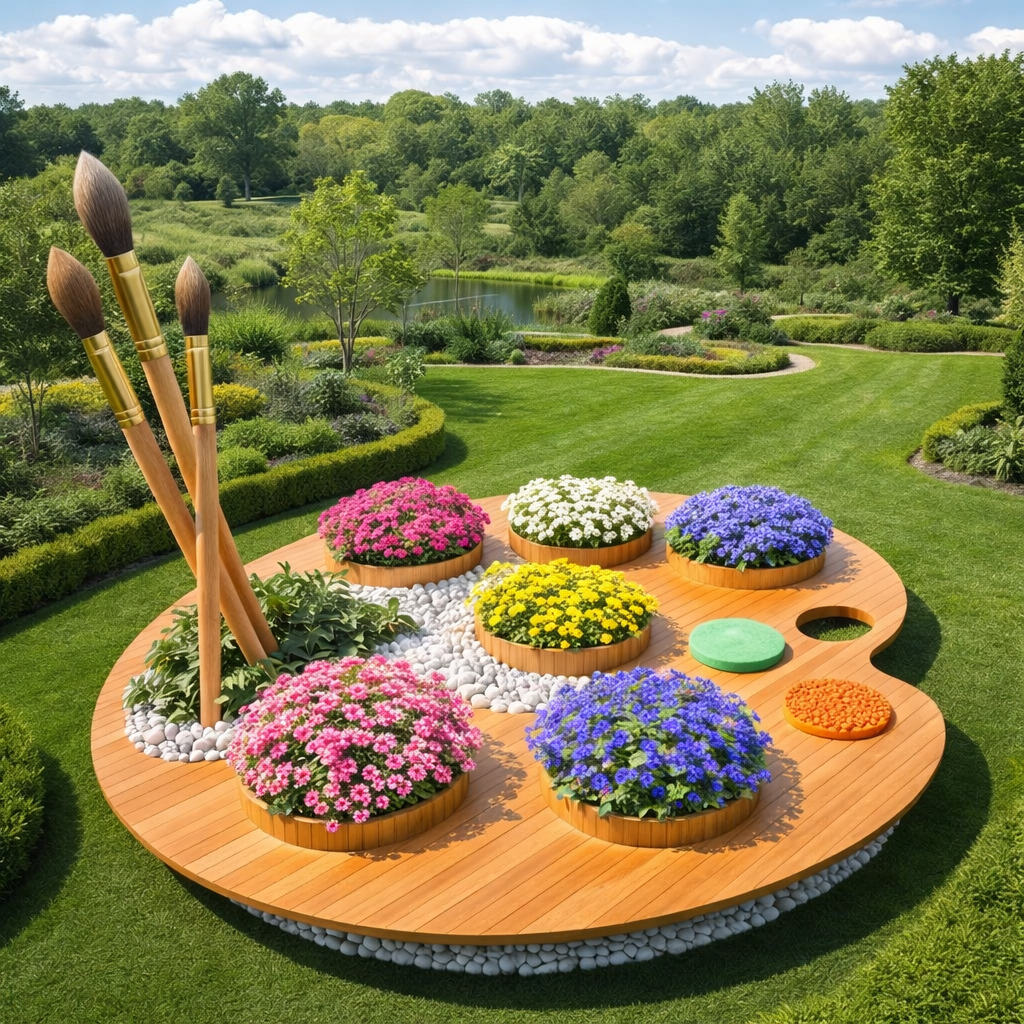
It is whimsical, yes. It is a little bit kitschy, perhaps. But in a world that can often feel grey and serious, having a giant, blooming art supply kit in your backyard is an act of defiance. It is a declaration that life should be colorful, that nature is the ultimate artist, and that you are the one holding the brush.
So, go to the nursery. Treat the aisles of flowers like the aisles of an art supply store. Pick your pigments. Sketch your shape. And create a living masterpiece that will leave the neighbors wondering when the gallery opens.