
Let us set the scene. It is 6:00 AM. The alarm clock has just sounded its terrible, shrill battle cry. You drag yourself out of bed, your eyes barely open, facing the daunting reality of the day ahead. You have a massive load to haul today—sure, it might just be a load of spreadsheets, a school drop-off, and three Zoom meetings, but it is a long haul nonetheless.
You shuffle into the kitchen, desperate for fuel.
Normally, you would walk up to a sleek, silver, entirely humorless coffee machine. You would press a quiet, polite little button, and it would whisper a stream of hot water into a mug. It is efficient, yes. But it is entirely devoid of soul.
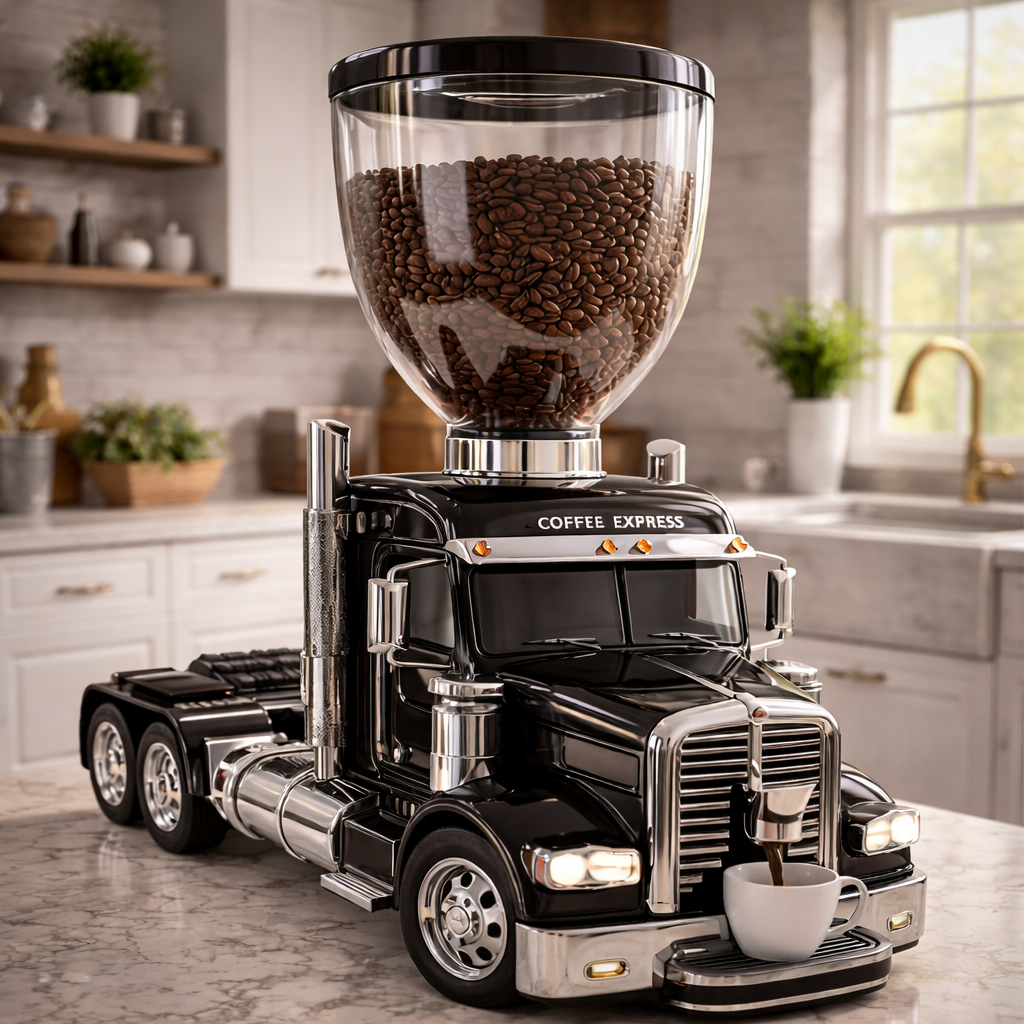
What if, instead, you walked into your kitchen and saw a miniature, chrome-plated, 18-wheel big rig parked squarely on your kitchen island? What if you flipped a heavy toggle switch, and this absolute unit of an appliance began to gurgle, spit steam out of its vertical exhaust stacks, and brew a pot of coffee right on the back of its flatbed trailer?
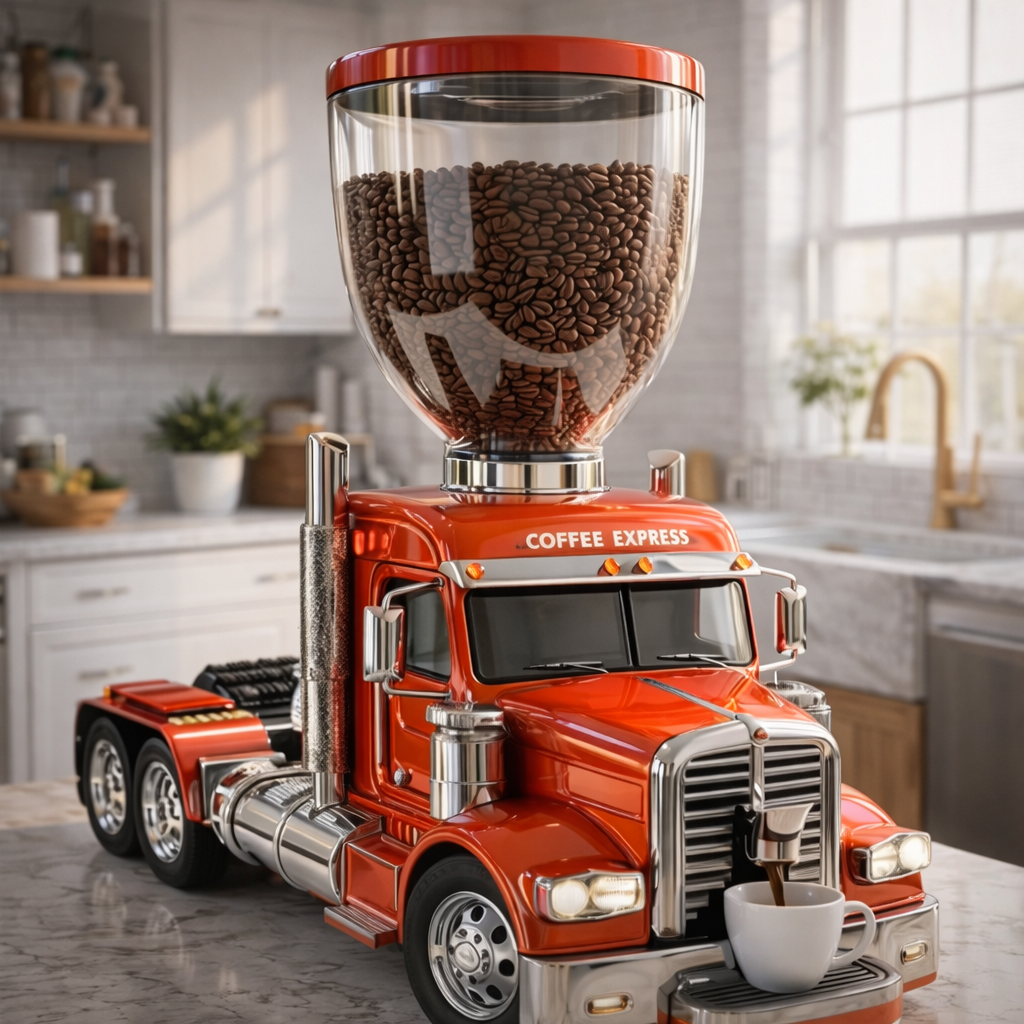
Breaker, breaker, good buddy. It is time to introduce you to the glorious, unhinged, and absolutely necessary Semi truck coffee tractor.
This is not a delicate kitchen appliance. This is a monument to the open road. It is the perfect collision of “truck stop diner” and “suburban countertop.” In this feature, we are putting the pedal to the metal and exploring why a coffee maker shaped like a tractor-trailer is the ultimate morning joyride. We will break down the anatomy of the rig, the sheer social dominance of heavy machinery in the breakroom, and how to brew a cup of mud strong enough to keep you driving all the way to Friday.
The Death of the Boring Kitchen
To understand the appeal of the Semi truck coffee tractor, you have to understand the rebellion currently happening in interior design.
For the last ten years, we have been told our kitchens need to look like operating rooms. Everything must be hidden. Appliances must be stainless steel or matte black. But humans are not built to live in sterile, humorless environments. We crave whimsy. We crave “Dopamine Decor.”
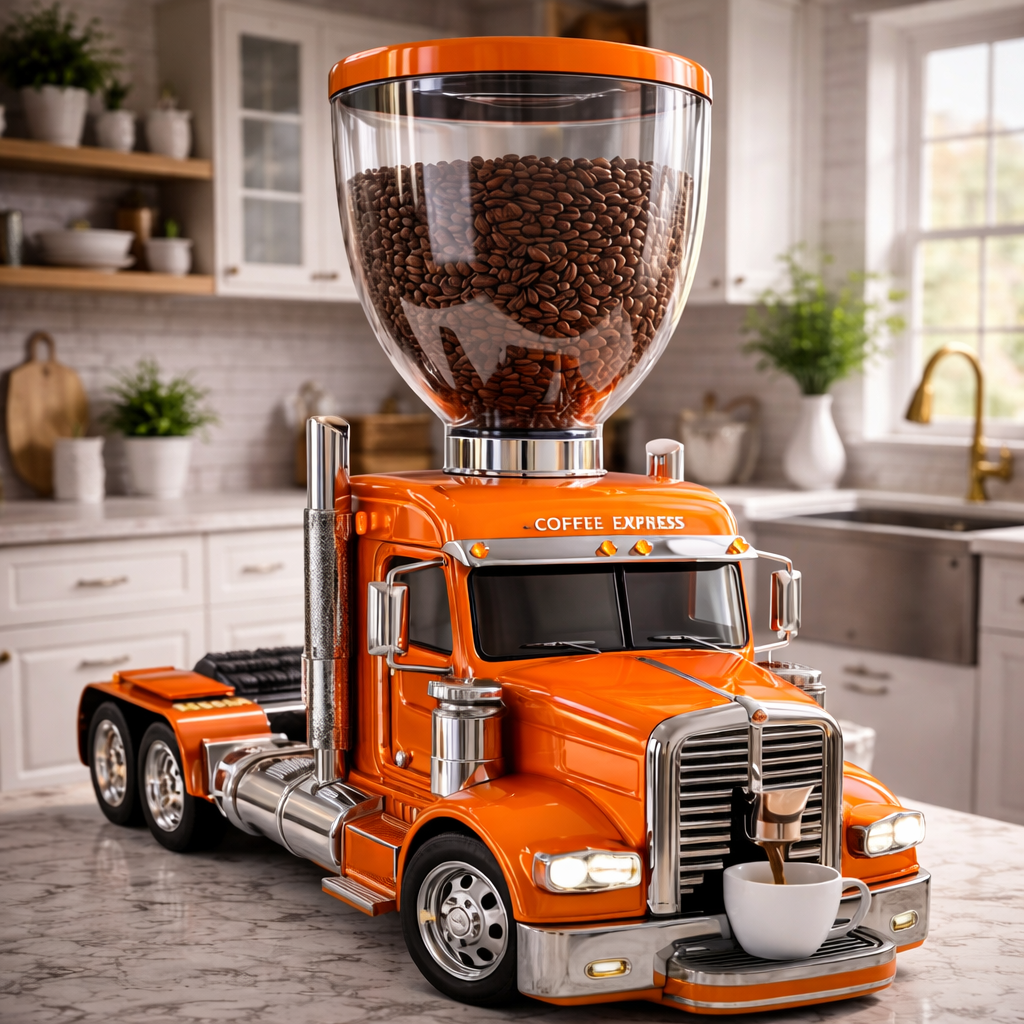
A coffee maker shaped like a semi-truck is a loud, honking air-horn of defiance against minimalism.


It says, “I refuse to take my morning routine too seriously.” It brings the rugged, gritty, romanticized ethos of the long-haul trucker right into your breakfast nook. When you own one of these, you are no longer just making a cup of coffee; you are fueling a massive diesel engine. It gives you a strange, entirely unearned sense of blue-collar pride before you sit down at your laptop to type emails.
Under the Hood: The Anatomy of the Rig
You might assume that a novelty appliance sacrifices the quality of the brew for the shape of the plastic. But the true beauty of these machines is how cleverly the mechanics of a drip coffee maker are disguised within the anatomy of a heavy-duty semi-truck.
1. The Cab (The Engine Block)
In a standard, boring machine, the water reservoir is a plastic tank in the back.
- The Design: In a Semi truck coffee tractor, the water tank is hidden directly inside the hood or the sleeper cab of the truck. You lift the roof of the cab to pour your water in.
- The Vibe: As the water boils and the machine begins to percolate, the entire cab seems to vibrate with mechanical energy. It genuinely sounds like a diesel engine idling at a truck stop.
2. The Smokestacks (The Steam Vents)
This is the absolute best feature of the design. A traditional coffee maker has boring vents to let excess steam escape so it doesn’t explode.
- The Drama: On a semi-truck coffee maker, these vents are often cleverly routed through the miniature chrome exhaust stacks jutting up behind the cab doors. As your coffee brews, visible steam puffs out of the vertical smokestacks. It is cinematic. It looks like you are running the machine on pure coal and horsepower.
3. The Flatbed Trailer (The Warming Plate)
Where does the coffee actually go?
- The Logistics: The back half of the tractor—the flatbed trailer—serves as the heating plate. The glass carafe (often printed with a cool trucking logo or a “hazardous materials” diamond) sits right on the back of the rig. You aren’t just pouring a cup; you are unloading precious cargo.
4. The Headlights (The Power Indicator)
Why have a boring little red LED dot to tell you the machine is on? Premium models of the semi-truck coffee maker actually wire the truck’s headlights to the power switch. When you flip the switch, the headlights illuminate the countertop. It is 6:00 AM, the lights are shining, the steam is rolling, and you are ready to hit the highway.
Choosing Your Rig: The Fleet
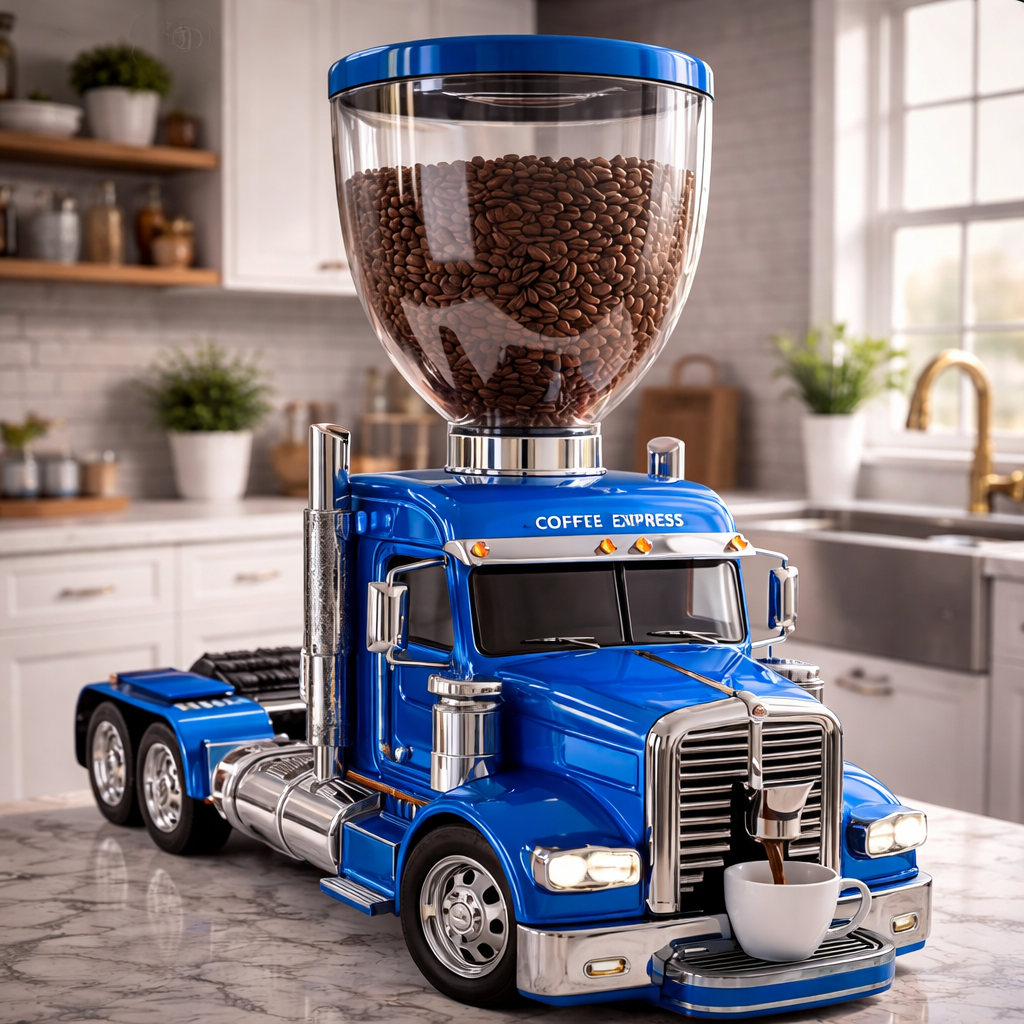
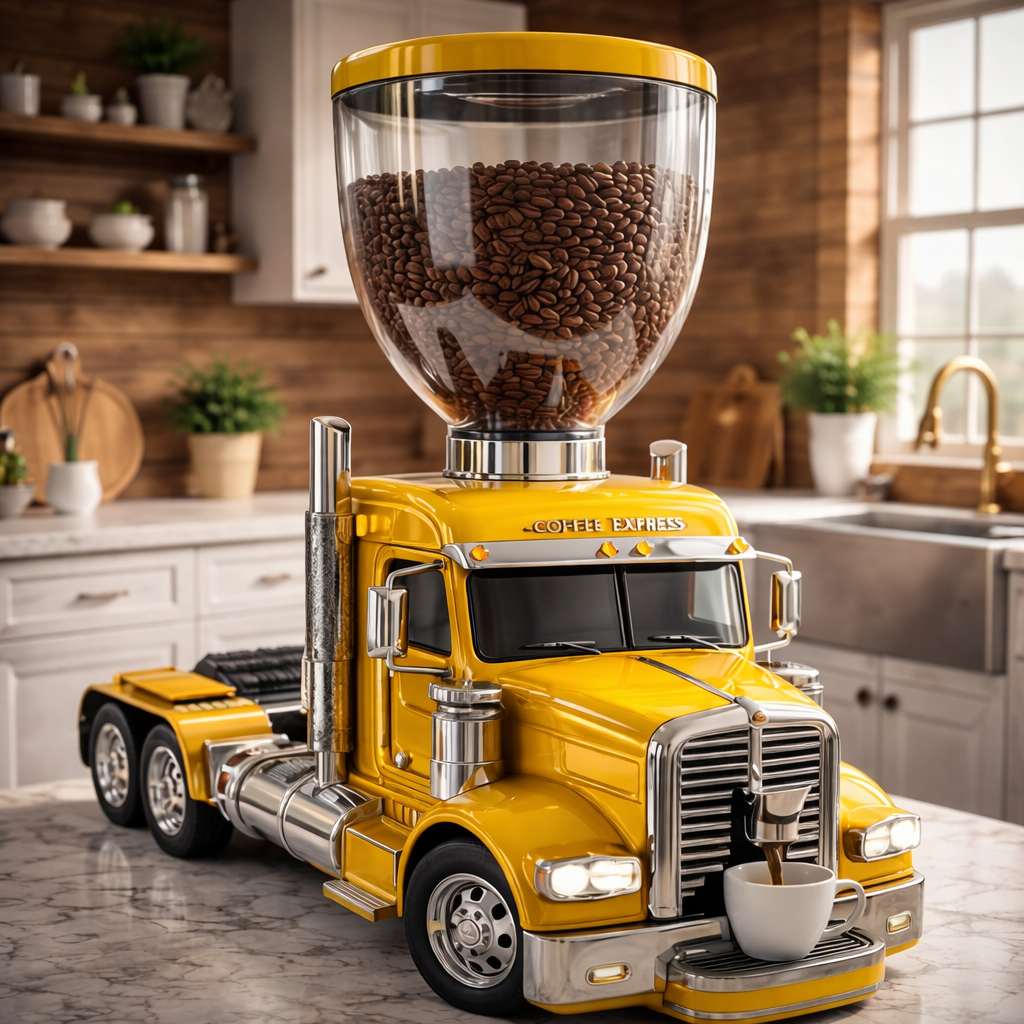
Not all trucking companies are the same, and neither are all Semi truck coffee tractors. The market has provided a fleet of vehicles to match your specific interior design (and caffeine) needs.
The Classic Chrome “Long Nose”
- The Look: Think Optimus Prime. It features a long, extended hood, massive chrome front grilles, and a sun visor over the windshield. Usually painted in a vibrant cherry red or deep midnight blue.
- The Vibe: This is the king of the highway. It demands respect. It pairs perfectly with a heavy ceramic diner mug and a plate of bacon and eggs.
The Retro “Cabover” Flat-Face
- The Look: This mimics the classic 1980s flat-nosed trucks where the cab sits directly over the engine.
- The Vibe: Pure retro nostalgia. It is slightly more compact, taking up a little less counter space, but it packs a massive punch of vintage, old-school cool.
The Stealth Matte Black
- The Look: All blacked-out trim, matte black paint, and smoked windows.
- The Vibe: For the modern, slightly edgy kitchen. It says, “I am hauling top-secret cargo, and that cargo is dark roast.”
The Ultimate Dad Flex (and Breakroom Dominance)
Let’s be honest about the social dynamics of this appliance.
If you bring a Semi truck coffee tractor into your office breakroom, you immediately establish yourself as the most fun person in the company. People who don’t even drink coffee will come to your cubicle just to watch the little truck brew. It becomes a communal gathering spot. It is the ultimate water-cooler conversation starter.
Furthermore, the coffee world has gotten incredibly pretentious. We have pour-over scales, burr grinders, and tasting notes of “jasmine and toasted blueberry.” The semi-truck coffee maker is the antidote to coffee snobbery.
It is physically impossible to be pretentious while pouring a cup of Folgers out of the back of a plastic flatbed trailer. It forces you to take the ritual less seriously.
For this reason, it has become the holy grail of gifts for fathers, grandfathers, and gearheads. Dads are notoriously difficult to shop for. But if you hand a dad a functional coffee maker shaped like an 18-wheeler, you bypass his logical brain and tap directly into his inner seven-year-old playing with Matchbox cars on the living room rug. He will pat the hood of the coffee maker every morning before he turns it on. He will probably make trucker radio noises (“psshhk”) while pouring his cup. It is a guaranteed win.
The Weigh Station: Routine Maintenance
Taking care of your rig requires a slightly different mindset than taking care of a normal appliance. You aren’t just doing dishes; you are performing routine fleet maintenance.
1. Descaling the Engine Block (The Radiator Flush) Just like a real semi-truck, hard water mineral deposits will build up in the engine over time. Every three months, you must run a mixture of white vinegar and water through the water tank. Think of this as flushing the radiator. If you don’t do this, the truck will start to sputter, and your morning fuel will taste like actual motor oil.
2. Polishing the Chrome The glossy plastic or metal finish of the tractor will collect kitchen grease and dust. A standard machine can just be wiped down with a sponge. But a semi-truck has mudguards, massive grilles, and tiny windshield wipers. You will need a damp microfiber cloth to get into the crevices. You have to keep the paint job looking fresh for the weigh station inspectors (your mother-in-law).
3. Parking Brake Check Make sure the rubberized grips on the bottom of the 18 tiny wheels are clean. If you spill coffee grounds on the counter and the truck parks on them, it will lose traction. You do not want a runaway big rig sliding off your granite island when you reach for the carafe.
Conclusion: Keep on Truckin’
We all have to wake up. We all have to face the day, pay taxes, sit in traffic, and do the laundry. The morning routine is often a grueling, repetitive chore that feels exactly like driving a long, straight, boring highway.
But it doesn’t have to start that way.
The Semi truck coffee tractor offers a brief, ridiculous moment of joy before the reality of the day sets in. It reminds us that adulthood doesn’t mean we have to surround ourselves with boring, sensible things. We can still play with toys; we just require those toys to dispense hot, caffeinated liquid to keep us awake.
So, clear a massive footprint on your counter. Throw away the silver obelisk. Buy the loudest, most aggressive, 18-wheel farm-to-highway implement you can find, and plug it into the wall.
The highway is waiting. The cargo is loaded. Flip the switch, wait for the smokestacks to start puffing, and plow through your morning like an absolute champion. 10-4, good buddy.