
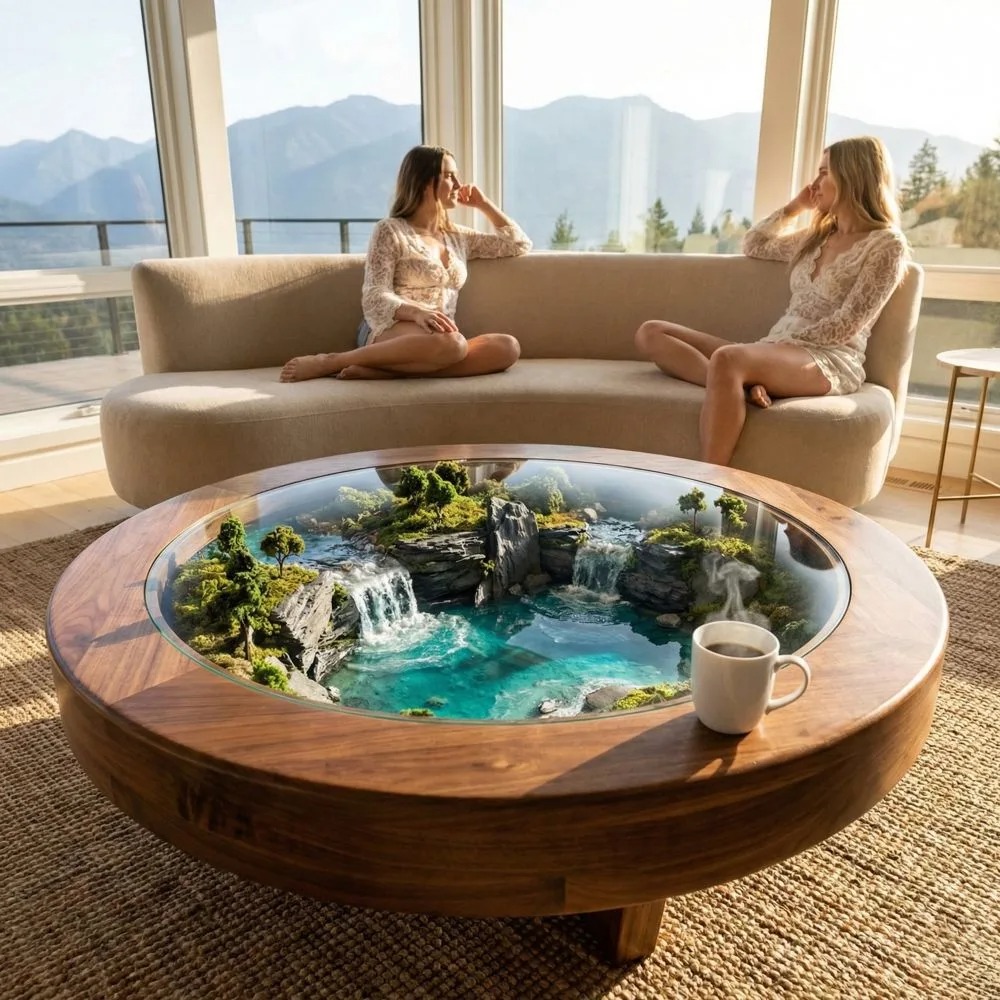
Furniture is usually static. A chair sits. A shelf holds. A rug lies flat. Our homes are filled with objects that are stationary, rigid, and defined by hard stops. We are used to tables that end abruptly at the edge, supported by four independent legs that have nothing to do with the surface they hold up.
But nature doesn’t work in hard stops. Nature flows. Rivers cascade over rocks; vines spill over walls; water rolls over the edge of a cliff.
What if your furniture captured that same energy?
Enter the Waterfall Coffee Table.
This is not just a trend; it is a masterclass in illusion and craftsmanship. It is a design where the horizontal surface doesn’t just “end”—it pours over the edge and continues down to the floor in one unbroken, seamless line. Whether it is crafted from a single slab of walnut or a vibrant river of epoxy resin, the waterfall table defies the traditional “tabletop and legs” structure. It creates a sense of infinite movement, a liquid curve frozen in time.
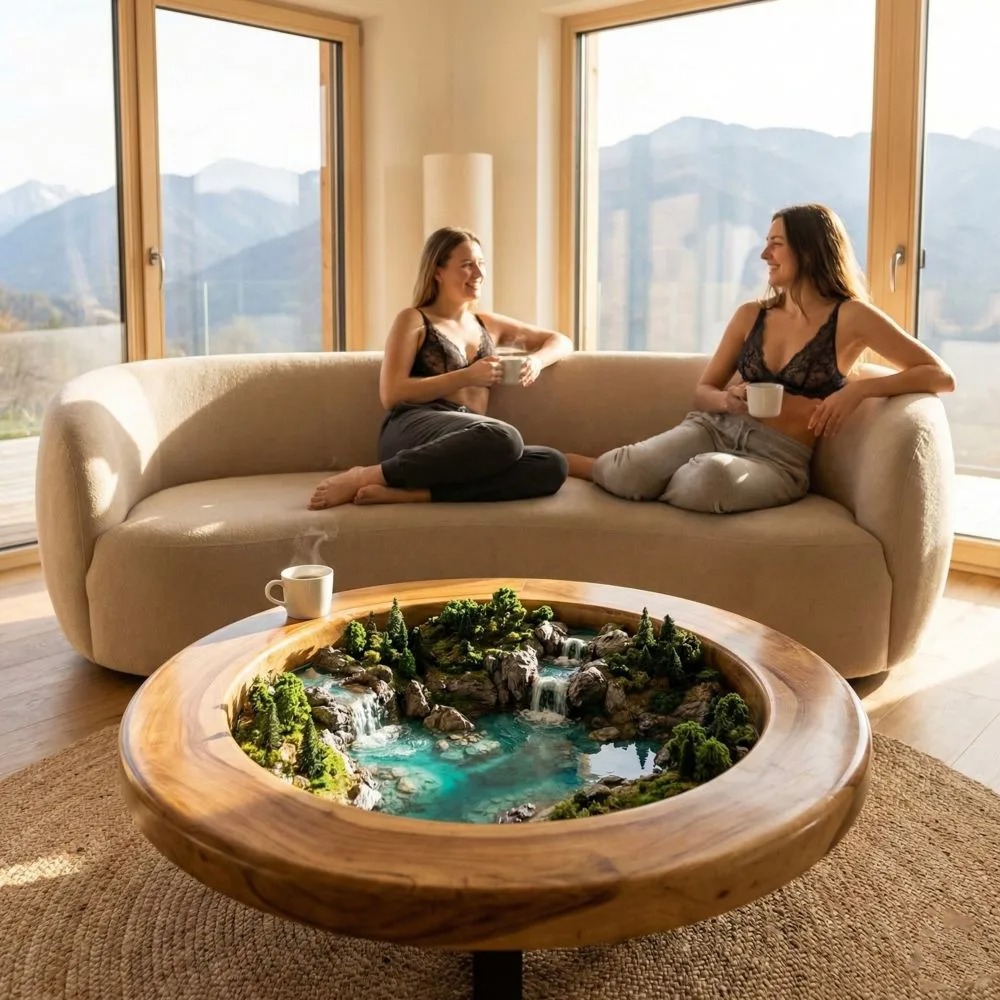
In this feature, we are exploring the fluid beauty of the waterfall edge. We will dive into why this specific joinery technique has become the hallmark of luxury woodworking, and how bringing a “cascading” piece into your home can unblock the energy of your entire living space.
The Anatomy of the Drop: What makes it a “Waterfall”?
To the untrained eye, a Waterfall Coffee Table looks simple. It looks like a piece of wood bent at a 90-degree angle. But any woodworker will tell you that “simple” is the hardest thing to achieve.
The magic lies in the Miter Joint.
In a standard table, the top is a separate piece from the legs. In a waterfall table, the “leg” is actually a continuation of the “top.” The artisan takes a massive slab of wood (or wood and resin), cuts it at a precise 45-degree angle, and folds it down.




The Continuous Grain (The Magic Trick)
This is the detail that separates a cheap knock-off from a masterpiece. When the wood is folded down, the grain patterns—the swirls, the knots, the growth rings—must continue seamlessly over the edge.
- The Effect: It tricks the eye. It looks as if the wood has become liquid and is melting over the side, obeying gravity. It creates a visual loop that is incredibly satisfying to the human brain. We love continuity. We love flow.
The River Runs Through It: The Resin Revolution
While the waterfall shape is a classic mid-century modern technique, the trend has exploded recently thanks to the integration of Epoxy Resin. This is where “Waterfall” becomes literal.
Imagine a Waterfall Coffee Table made from two slabs of live-edge maple. Between them flows a translucent blue river of hardened resin. As the table reaches the edge, that blue river doesn’t stop. It curves over the precipice and “spills” all the way down to the floor.
The “Frozen Motion”
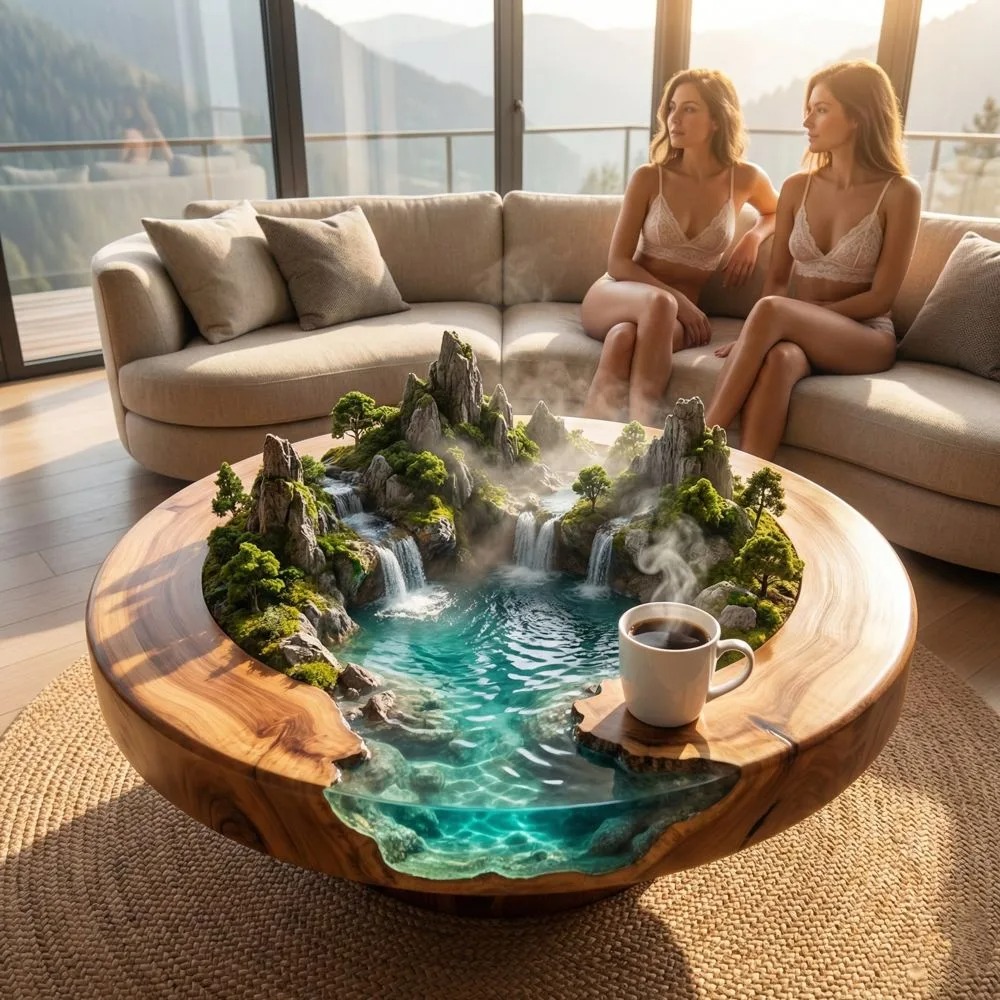
This design creates a piece of kinetic art. It looks like a cross-section of a real waterfall. The resin catches the light, glowing from within, mimicking the depth and movement of water.
- The Colors: From deep Caribbean teals that look like the ocean, to smoky blacks that look like volcanic magma, the resin adds a pop of “Dopamine Decor” color to the warmth of the wood.
- The Clarity: High-end tables use “glass-cast” resin, which is so clear you can see the rugged bark of the live edge all the way down the vertical drop.
The Aesthetic Impact: Why Your Room Needs “Flow”
Why choose a Waterfall Coffee Table over a regular one? It comes down to visual weight and energy.
1. The “Infinity Pool” Effect Standard tables with four legs can look cluttered visually. They add “noise” to the lower half of the room. A waterfall table, with its solid planes and clean lines, acts like a piece of sculpture. It directs the eye smoothly from the floor, up the side, and across the surface. There are no visual interruptions.
2. Grounding the Space Because the material (wood or stone) touches the floor directly along the entire width of the table, it feels incredibly grounded. It anchors the room. It feels substantial and permanent, like a boulder in a Japanese garden.
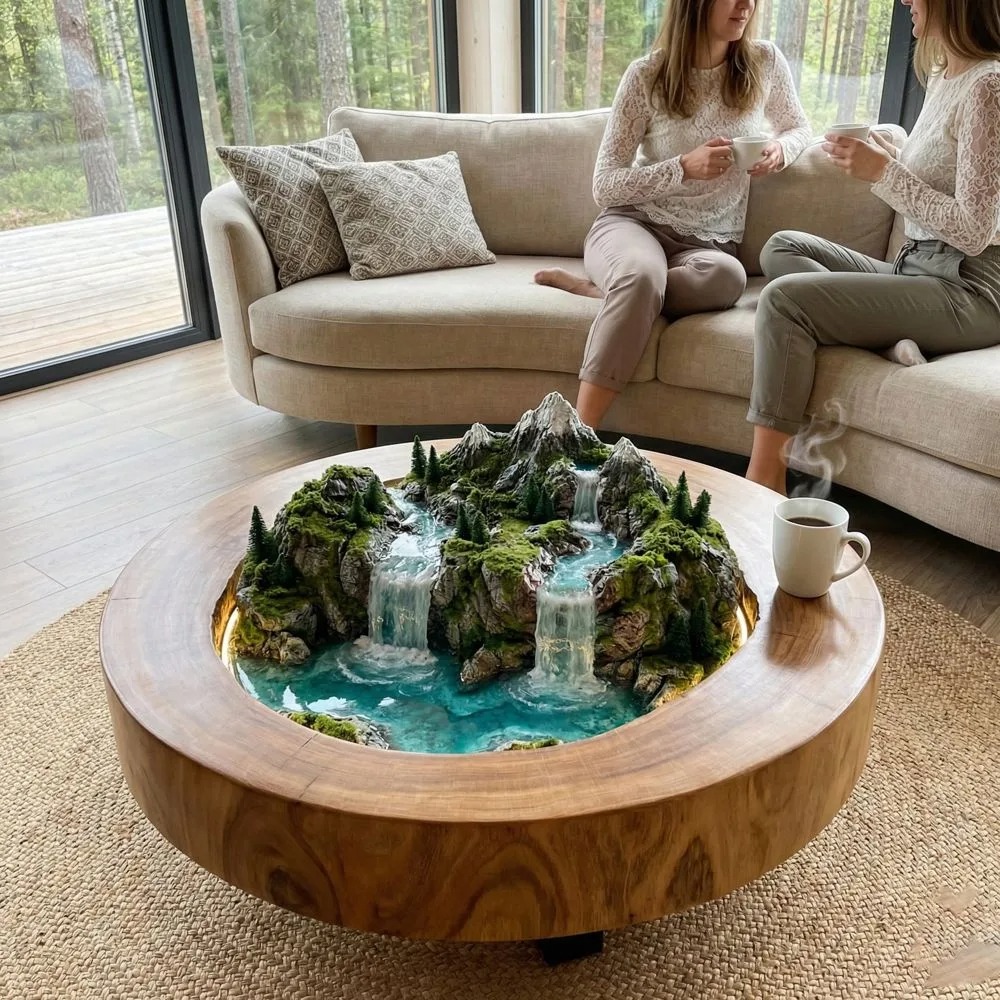
3. Softening the Edges Despite being a rectangle, the concept of a waterfall is soft. It implies flexibility. In a room full of sharp corners and tech gadgets, a table that mimics the flow of water adds a subconscious layer of relaxation.
Styles of the Cascade
The Waterfall Coffee Table is a chameleon. It fits into almost any design language, depending on the material.
The Purist (Solid Wood)
- Material: Black Walnut, White Oak, or Zebrawood.
- The Vibe: Mid-Century Modern or Scandinavian. It is all about the warmth of the timber and the precision of the joinery. It is understated luxury.
- Styling: Pairs perfectly with a leather sofa and a wool rug.
The River Hunter (Live Edge + Resin)
- Material: Burl wood and colored epoxy.
- The Vibe: Artistic, Maximalist, and Rustic-Chic. This is the “Statement Piece.” It demands attention.
- Styling: Keep the rug neutral. Let the “river” be the only color on the floor level.
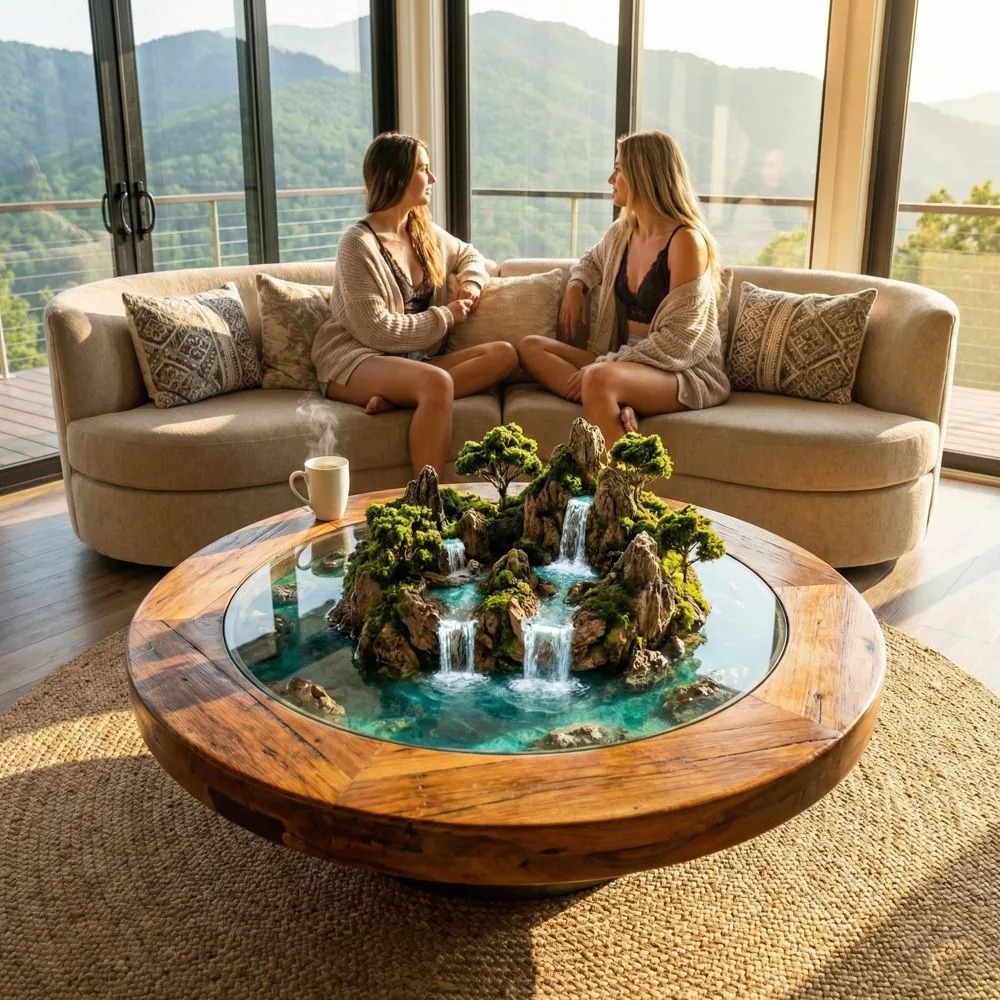
The Invisible Flow (Acrylic/Lucite)
- Material: 100% thick, clear acrylic.
- The Vibe: Ultra-modern and Glam.
- The Trick: Because it is clear, it takes up zero visual space. It is perfect for small apartments because it makes the room look bigger. It looks like a waterfall of pure ice.
The Challenge of the Craft
If you are looking to buy or commission a Waterfall Coffee Table, you should appreciate the difficulty involved. This justifies the price tag.
The “Open Book” Match: To get a wide table, woodworkers often “bookmatch” slabs—slicing a log open like a book so the left and right sides mirror each other. Now, add the waterfall fold to that. You are managing symmetry on the X, Y, and Z axes.
The Epoxy Danger Zone: Pouring resin on a flat surface is hard. Pouring resin so it flows over an edge without dripping, bubbling, or separating from the wood is an engineering nightmare. It often requires building complex mold boxes that encompass 3D angles. A perfect resin waterfall is a badge of honor for a maker.
Styling Your Flow: How to Decorate
Once you have this masterpiece, how do you style it? The rule of thumb is: Don’t block the drop.
- The Orientation: Always position the “waterfall” leg facing the main entrance of the room. You want guests to see the continuous grain the moment they walk in. If you hide the waterfall side against a sofa, you’ve wasted the money.
- The Top Decor: Keep it minimal. A low stack of art books or a single sculptural vase. Do not clutter the surface. The wood grain and the river are the decoration.
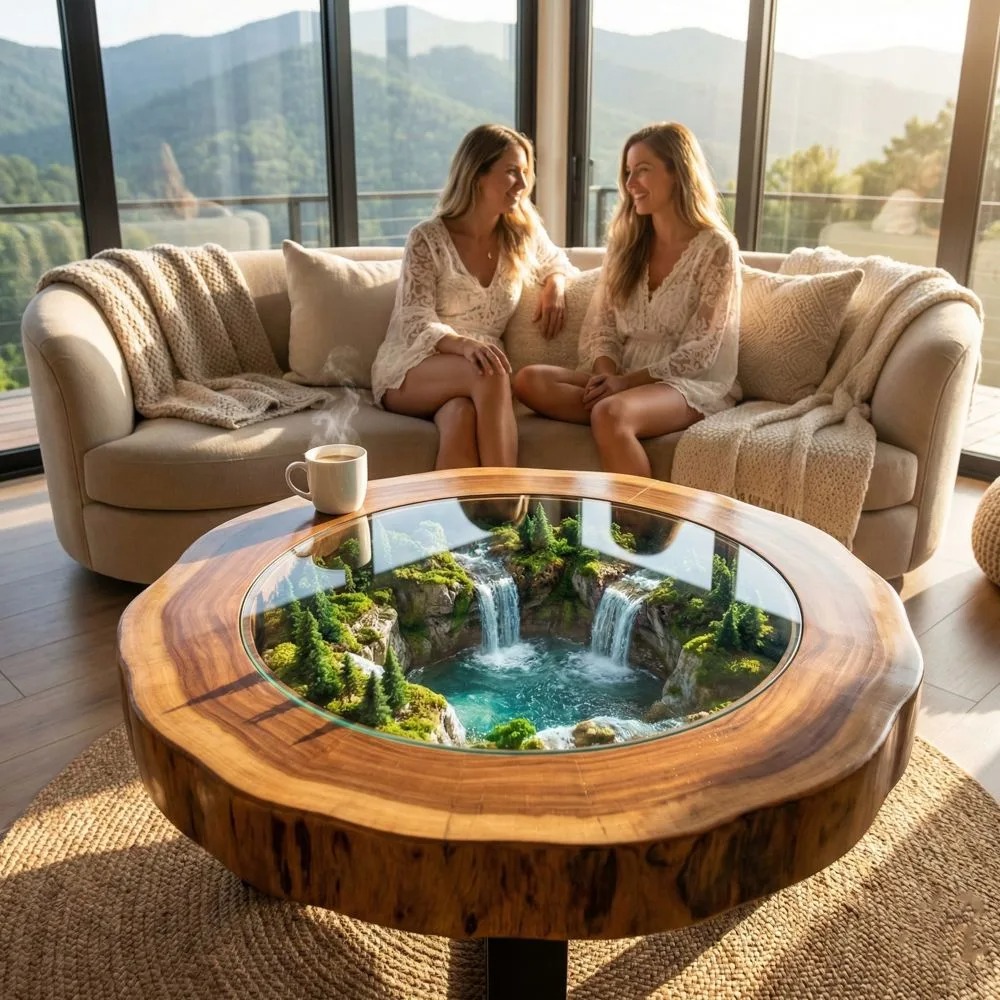
- Lighting: If you have a resin river table, consider placing a small up-light on the floor near the waterfall leg. The light will travel up through the resin, illuminating the “water” from the inside out.
Conclusion: Go With the Flow
In interior design, we often talk about “flow”—how people move through a room, how light travels, how colors connect. The Waterfall Coffee Table is the physical embodiment of that concept.
It breaks the rigid rules of furniture construction. It refuses to just “stop” at the edge. It dares to continue, to roll over the side, to connect the tabletop to the earth in one sweeping motion.
Whether you choose a slab of ancient walnut that looks like a folded ribbon, or a neon-blue resin river that looks like a glacial melt, you are bringing a sense of movement into your home. You are inviting your eye to travel, to slide, and to rest.
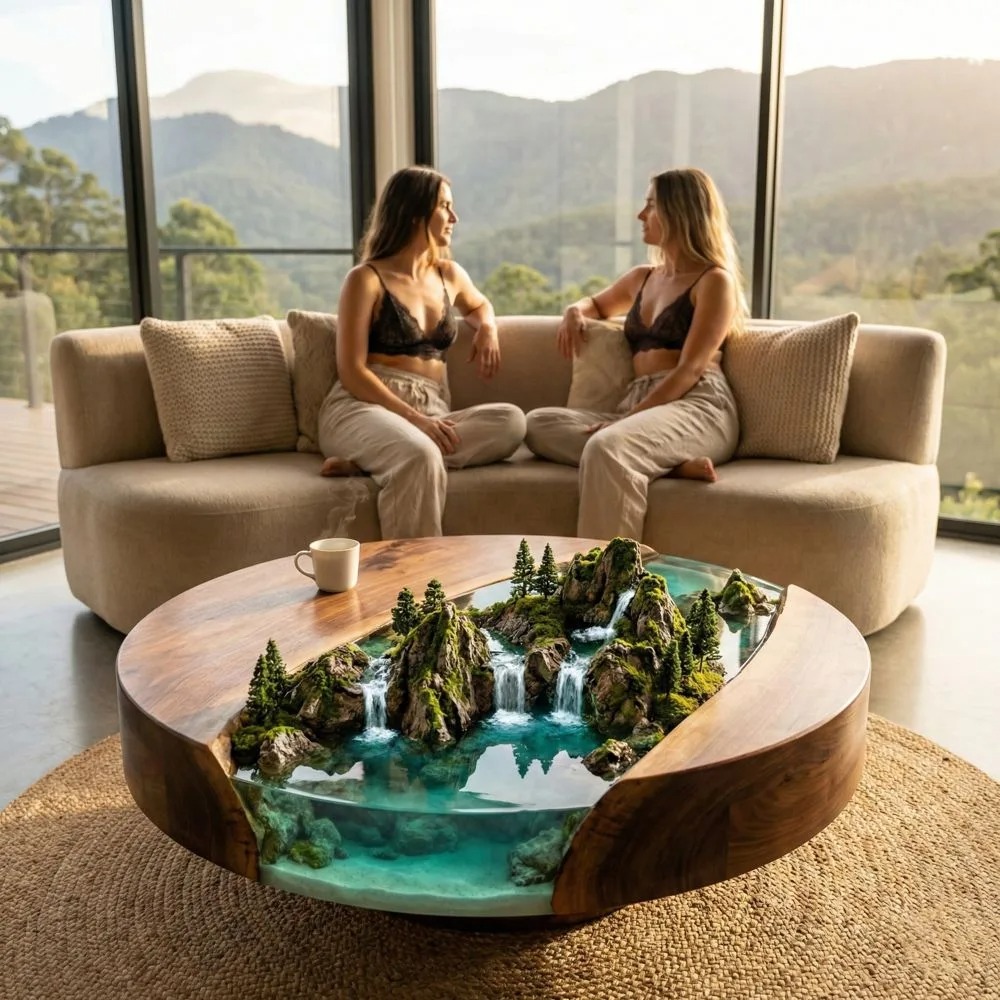
So, forget the four legs. Forget the sharp stops. Let your design cascade. Because when you let the style flow, the whole room feels a little more fluid.

